

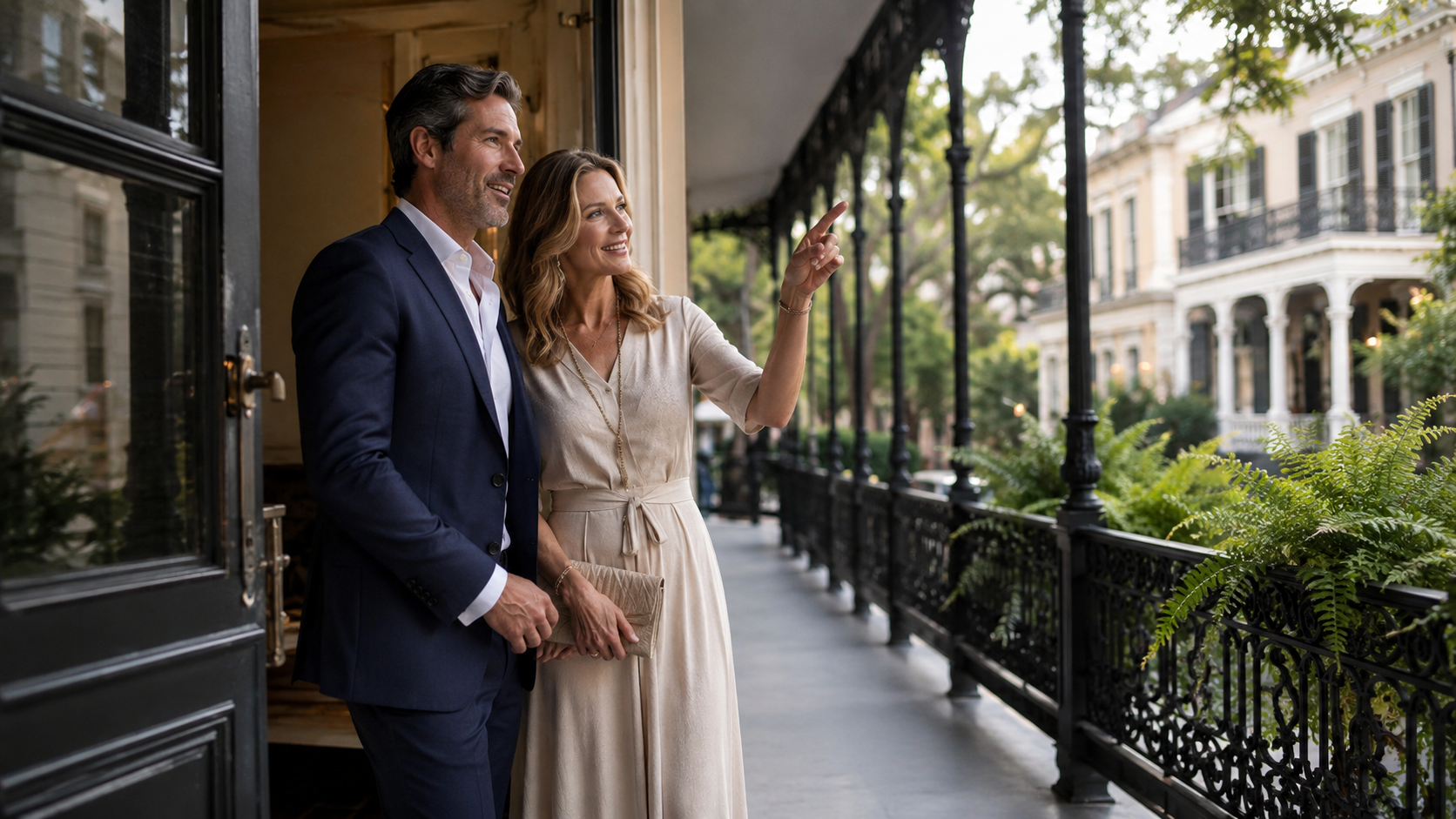
A renovated Uptown home may have soaring ceilings, original plasterwork, and a beautifully designed kitchen. But for many discerning buyers, the deciding questions now reach well beyond finishes: How did the home perform during recent storms? What are the insurance costs? Is there off-street parking? How private is the outdoor space? Luxury buyer expectations trends are changing the conversation in New Orleans, where charm and character remain essential, but confidence in a property’s daily performance has become equally valuable.
For buyers at the higher end of the market, luxury is increasingly defined by ease, discretion, resilience, and informed guidance. A home should feel exceptional, certainly. It should also support the way its owner actually lives, whether that means working from home, hosting friends, locking and leaving for travel, or enjoying a low-maintenance condominium in the heart of the city.
Luxury Buyer Expectations Trends Go Beyond Finish Levels
Marble, millwork, premium appliances, and architectural detail still matter. In a city with such a rich built environment, buyers often want homes with a clear sense of place: a Center Hall cottage in Uptown, a Creole townhouse near the French Quarter, a refined residence in the Garden District, or a modern condominium with skyline or river views.
What has changed is the expectation that these elements come with thoughtful function. Buyers want to know whether systems have been updated, how the home has been maintained, and whether improvements were made with care rather than simply for appearance. A restoration that preserves historic character while improving electrical, plumbing, roofing, insulation, and climate control can carry greater appeal than a cosmetic renovation that leaves important questions unanswered.
This does not mean every luxury buyer is looking for a fully renovated home. Some actively seek a property with original details and the opportunity to make it their own. The difference is clarity. Buyers are more prepared to take on a project when they understand the scope, the costs, and the neighborhood value that supports the investment.
Resilience Is Part of the Luxury Conversation
In New Orleans, a property’s infrastructure is no longer a secondary due diligence item. It is central to buyer confidence. Flood elevation, drainage, roof age, window condition, generator capacity, storm protection, and insurance history can influence how a buyer evaluates both comfort and long-term value.
A generator, for example, may not be necessary for every purchaser, but it is often viewed as a meaningful quality-of-life feature. The same is true of impact-resistant windows, elevated mechanical systems, whole-house surge protection, and carefully designed drainage. These details communicate preparation and stewardship.
The trade-off is that resilient features do not automatically overcome poor layout, an inferior location, or an unrealistic price. Buyers still weigh the complete package. A well-maintained home with practical improvements may earn stronger interest, but it must be positioned against comparable properties with an honest understanding of condition, location, and insurance considerations.
Information Has Become a Premium Amenity
Luxury buyers expect accurate answers early in the process. They want documentation for renovations, permits when applicable, warranty details, utility information, and a realistic view of ownership costs. A polished listing can create interest, but credible information helps a buyer move forward with confidence.
For sellers, preparation should include more than staging and photography. A well-organized property file can reduce uncertainty and demonstrate that the home has been cared for. For buyers, working with an agent who understands which local questions to ask can prevent a beautiful first impression from becoming an expensive surprise later.
Privacy, Flexibility, and Everyday Ease
The definition of privacy has expanded. For some buyers, it means a gated driveway, secure parking, and a landscaped courtyard shielded from the street. For others, it means a condominium with controlled access, professional management, and the ability to travel without worrying about exterior upkeep.
Space is being evaluated differently, too. A formal dining room remains desirable in many historic homes, yet buyers also look for flexible rooms that can serve as an office, gym, media room, guest suite, or private study. A detached guest house or carriage house can be especially appealing, provided its condition, permitted use, and maintenance needs are clear.
Convenience carries weight across property types. Walkability to restaurants, parks, schools, and neighborhood services can be a major draw. So can the practical comforts that are sometimes harder to find in older homes: generous closets, a functional laundry room, covered parking, reliable storage, and an outdoor entertaining area that feels genuinely usable in New Orleans weather.
Neighborhood Knowledge Is More Valuable Than Broad Labels
A buyer may begin with a broad request for Uptown, the Warehouse District, Lakeview, or the Garden District. The right fit often comes down to a few blocks, a particular avenue, or the rhythm of a specific micro-neighborhood. Street activity, parking patterns, proximity to commercial corridors, architectural consistency, and the condition of nearby properties all shape the experience of living there.
Higher-end buyers increasingly expect their real estate advisor to provide that context. They are not merely buying square footage. They are choosing a daily routine, a community, and a long-term position in a market where inventory can be highly individual.
That is especially true for historic properties. One buyer may prize original floors and a deep front gallery, while another may prefer a newer construction home with lower maintenance and a more open plan. Neither preference is more sophisticated. The goal is to identify which trade-offs align with the buyer’s priorities before the search becomes overly focused on surface-level features.
White-Glove Service Must Be Useful, Not Performative
Luxury service is not about creating unnecessary ceremony. It is about making a complex decision feel organized, responsive, and well managed. Buyers expect efficient scheduling, timely communication, thoughtfully curated options, and direct guidance when a property presents an opportunity or a concern.
They also expect discretion. Not every buyer wants a broad search or a highly visible transaction, particularly when considering distinctive homes, private sales, or limited inventory. A concierge-style approach should respect a client’s time and privacy while still bringing the right opportunities forward.
At Raymond Real Estate, that standard means pairing polished service with practical local knowledge. The most valuable guidance is rarely generic. It may be a conversation about condominium association documents, the difference between two nearby blocks, the implications of a renovation plan, or whether a listing’s premium is supported by recent market activity.
What These Expectations Mean for Sellers
Sellers do not need to add every possible luxury feature before listing. Strategic preparation is more effective than indiscriminate spending. A well-presented home with transparent records, resolved maintenance issues, and a clear story will often make a stronger impression than a property filled with upgrades that do not match buyer priorities.
Consider the likely audience. A lock-and-leave condominium buyer may care deeply about building reserves, management quality, parking, security, and monthly fees. A purchaser of a historic single-family home may be more focused on roof condition, drainage, architectural integrity, outdoor living, and the quality of past renovations. Marketing should address the real benefits of the property rather than relying on broad luxury language.
Pricing requires the same discipline. Premium buyers can recognize quality, but they are also well informed. They will compare condition, location, carrying costs, and available alternatives. An ambitious price can be justified when the home is truly differentiated, yet the distinction must be visible and supported.
A Better Way to Approach a Luxury Home Search
The strongest searches begin with priorities that are specific enough to guide decisions. Instead of simply asking for a larger home or a better neighborhood, buyers benefit from defining what would improve their life: less maintenance, more privacy, proximity to work, space for family, historic detail, outdoor entertaining, or stronger resilience features.
Then, separate non-negotiables from preferences. A buyer may want both a pool and walkability, for example, but may need to decide which carries more value in the neighborhoods and price range under consideration. That clarity makes it easier to act when the right property appears.
A well-chosen New Orleans home should offer more than a memorable showing. It should give its next owner confidence on an ordinary Tuesday, during a heavy summer rain, and years after the closing table. That is the kind of luxury worth pursuing. Learn More
Frequently Asked Questions About Luxury Buyer Expectations in New Orleans
What are luxury homebuyers looking for in New Orleans?
Today’s luxury buyers are looking for more than impressive square footage. They want a distinctive property that combines New Orleans architecture with modern comfort, privacy, quality craftsmanship and convenient access to the city’s culture and amenities. Renovated historic properties in prime architectural locations continue to attract attention, particularly when they include features such as pools, guest cottages and thoughtfully preserved period details.
Do luxury buyers prefer historic homes or newer construction?
Both can appeal to luxury buyers, but historic homes must provide more than architectural charm. Buyers often expect original details—such as millwork, hardwood floors, high ceilings, fireplaces and decorative plaster—to be paired with updated electrical, plumbing, roofing, HVAC and drainage systems. The strongest properties preserve their authenticity without requiring the buyer to immediately undertake major renovations.
How important is move-in-ready condition?
Move-in-ready condition has become increasingly important. Affluent buyers may personalize finishes after purchasing, but many do not want to begin with deferred maintenance, outdated mechanical systems or a lengthy structural renovation. Quality, authenticity, convenience and efficiency are now central expectations within the luxury market.
Which amenities are most attractive to New Orleans luxury buyers?
Desirable amenities frequently include:
- Chef-style kitchens with premium appliances
- Spa-inspired primary bathrooms
- Walk-in closets and customized storage
- Swimming pools and landscaped courtyards
- Covered patios and outdoor entertaining areas
- Guesthouses, carriage houses or private guest suites
- Home offices, gyms and wellness spaces
- Whole-house generators and advanced security systems
- Smart lighting, climate and window-treatment controls
- Secure off-street or garage parking
Indoor-outdoor living remains an especially important luxury feature, while wellness, privacy and lifestyle-focused design continue to influence buyer decisions. Learn More
How important are flood risk and insurance costs to luxury buyers?
They are critical considerations in New Orleans. Buyers increasingly investigate the property’s flood zone, elevation, roof age, insurance claims history and estimated homeowners and flood insurance premiums before making a final decision. Sellers should consider obtaining current insurance information and organizing available elevation certificates, roof documentation and property-improvement records before listing. FEMA recommends reviewing the official flood map for an individual address, while the Louisiana Department of Insurance encourages consumers to compare coverage, deductibles and insurers carefully.
Are luxury buyers willing to purchase homes that need renovation?
Some are, especially when the property offers exceptional architecture, a prestigious location or features that cannot easily be recreated. However, the price must reflect the renovation required. Buyers are likely to evaluate the total investment—including construction, insurance, historic-district requirements and carrying costs—rather than focusing only on the purchase price.
How important are privacy, security and parking?
Privacy and discretion are significant expectations among affluent buyers. Gated entrances, private courtyards, secure parking, controlled building access, security systems and homes positioned away from heavy pedestrian traffic can increase appeal. In dense neighborhoods such as the French Quarter, Warehouse District and Uptown, dependable parking can be viewed as a true luxury feature. Affluent buyers also expect confidentiality and a personalized, discreet purchasing experience.
Do luxury buyers care about energy efficiency and smart-home technology?
Yes. Buyers increasingly appreciate energy-efficient windows, insulation, high-efficiency HVAC systems, smart thermostats, water-management improvements, solar capability and automated home controls. These upgrades can provide greater comfort and lower operating demands, but they should be integrated without compromising the home’s architectural character. Sustainability and energy-efficient design have become increasingly relevant across the luxury market.
Which New Orleans neighborhoods attract luxury buyers?
Luxury demand is not limited to one neighborhood. Uptown and the Garden District attract buyers seeking historic architecture, larger lots and proximity to St. Charles Avenue and Magazine Street. The French Quarter appeals to buyers interested in cultural access and one-of-a-kind historic residences, while the Warehouse District and Central Business District offer luxury condominium living with restaurants, entertainment and building amenities nearby. The best location ultimately depends on whether the buyer prioritizes privacy, walkability, architectural character, entertaining space or a low-maintenance lifestyle.
What presentation standards do luxury buyers expect?
Luxury buyers expect a property to be presented professionally. High-resolution photography, cinematic video, accurate floor plans, polished staging and detailed information about renovations and architectural features can shape the buyer’s first impression. Marketing should communicate the property’s lifestyle and provenance—not simply provide a list of rooms and finishes.
How can sellers make a luxury property more competitive?
Before listing, sellers should address visible maintenance concerns, organize renovation and insurance documentation, professionally prepare the interiors and identify the features that make the property difficult to replace. Pricing is equally important. Even a remarkable home can lose momentum when its price is not supported by its condition, location and recent comparable sales. A successful luxury strategy should combine realistic positioning with elevated presentation and targeted exposure to qualified buyers.
Check out this article next