

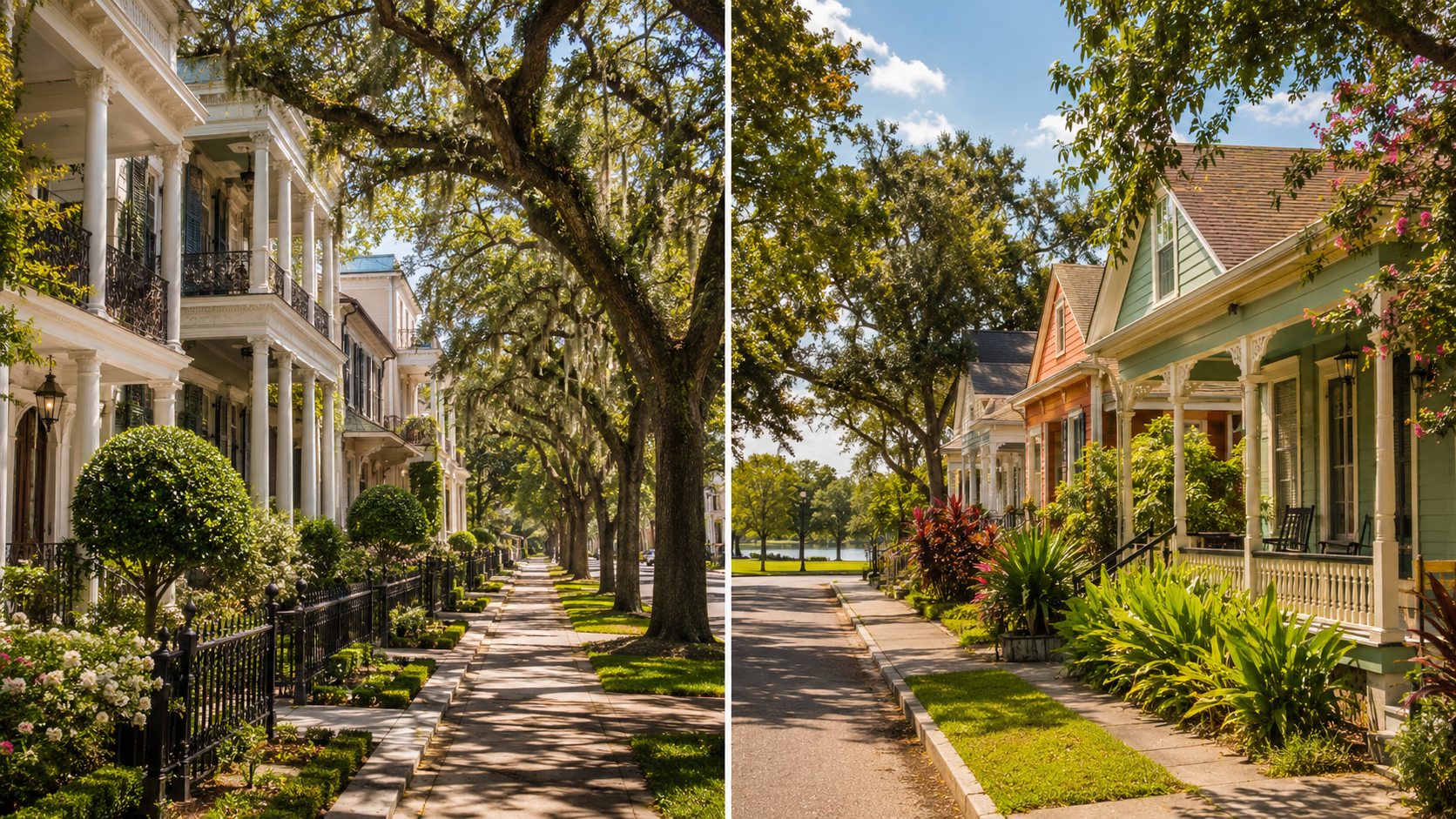
A home search can change direction in a single afternoon: coffee beneath Uptown oaks, then a bike ride near Bayou St. John or City Park. When comparing Uptown versus Mid-City homes, buyers are rarely choosing between a better and worse neighborhood. They are deciding which daily rhythm, housing style, and set of property trade-offs best supports the life they want to build in New Orleans.
Both areas offer character, established streetscapes, and access to beloved local institutions. Yet they can feel distinctly different in scale, architecture, lot configuration, walkability, and price expectations. The right choice comes from looking beyond a listing's finishes and understanding how the neighborhood and the individual property will perform for you over time.
Uptown Versus Mid-City Homes: The Core Difference
Uptown generally appeals to buyers seeking a more traditional residential setting with grand architecture, mature trees, and a strong sense of continuity. The area is broad, and the experience can vary considerably from one block to the next, whether you are near St. Charles Avenue, Audubon Park, Magazine Street, Freret Street, or the river. What many buyers share is an appreciation for historic homes, larger-scale residences, and established streets that feel removed from the pace of the central business districts.
Mid-City often attracts buyers who want a central location, practical access to multiple parts of the city, and an active neighborhood feel. Its housing stock is equally rich in character but often presents a different mix of cottages, doubles, bungalows, raised homes, and renovated properties. Proximity to Bayou St. John, City Park, the Lafitte Greenway, Canal Street, and local dining corridors can make Mid-City especially compelling for buyers who value everyday convenience and outdoor access.
Neither description should be treated as a rule. New Orleans neighborhoods are highly block-specific. A quiet Uptown side street and a busy Uptown commercial corridor create very different ownership experiences, just as a home near the bayou may live differently from one closer to a major Mid-City thoroughfare.
Architecture, Space, and the Feel of Home
What buyers often find Uptown
Uptown inventory can include center-hall homes, Victorian and Italianate residences, raised cottages, shotguns, townhomes, and updated condominiums. The architectural range is part of the appeal, but buyers are often drawn to original millwork, high ceilings, porches, formal entertaining rooms, and deeper lots. In some locations, a larger footprint, off-street parking, or a separate guest suite may be more attainable than in denser parts of the city.
Historic character deserves close attention during due diligence. Original windows, fireplaces, roofs, foundations, plumbing, electrical systems, and additions can all affect maintenance planning. A beautifully renovated home may offer a strong balance of period detail and modern function, while an untouched property may require a buyer with a clear renovation budget and patience for the process.
What buyers often find in Mid-City
Mid-City homes can feel more casual and adaptable to everyday living. You may find classic shotguns and doubles alongside renovated cottages with open kitchens, flexible bonus rooms, and manageable yards. The neighborhood also includes homes with income-producing potential, though buyers should verify legal use, zoning, permits, and current lease considerations rather than relying on a property's past setup.
For buyers prioritizing a lower-maintenance lifestyle, Mid-City can also offer attractive condominium and townhome options. But smaller square footage does not automatically mean fewer responsibilities. Shared building expenses, parking arrangements, HOA governance, and flood and wind insurance requirements should be reviewed with the same care as the home's interior finishes.
Lifestyle: Your Routine Matters More Than a Map Pin
The most useful question is not, “Which neighborhood is more desirable?” It is, “What will a typical Tuesday look like here?”
Uptown can suit buyers who picture walking to dinner or shopping on Magazine Street, spending weekends near Audubon Park, and returning to a quieter residential block. For many households, the appeal is space for entertaining, a home office, children, pets, or long-term guests. The neighborhood can feel especially suited to buyers who see their home as both a private retreat and a setting for gathering.
Mid-City may fit buyers who want efficient access to downtown, the medical district, City Park, and several major transportation routes. Its central location can reduce friction in a busy schedule. The neighborhood also appeals to those who want outdoor recreation close by, from morning walks along the bayou to weekends at the park, without giving up the texture of an older New Orleans neighborhood.
Street activity matters in both areas. Before making an offer, visit at different times: weekday morning, late afternoon, evening, and after rain if possible. Listen for traffic, train or streetcar noise where applicable, nearby nightlife, school activity, and event-related congestion. A home can be perfectly located for one buyer and overly active for another.
Price Is Only One Part of the Ownership Cost
A purchase decision should be grounded in the complete financial picture. Uptown homes often command a premium for location, scale, architectural significance, lot size, and proximity to established amenities. Mid-City may offer more flexibility at certain price points, particularly for buyers willing to consider a smaller home, a property needing updates, or a location just outside the neighborhood's most sought-after pockets.
Still, headline price is not the full comparison. In New Orleans, annual ownership costs can shift materially based on the exact address and condition of the home. Flood zone designation, elevation information, prior flood history, roof age, wind coverage, deductible structures, foundation condition, and the presence of older systems can influence affordability.
Buyers should request available elevation certificates, insurance declarations when appropriate, renovation permits, utility history, and disclosure documents early in the process. These records do not replace inspections or insurance quotes, but they help turn assumptions into informed decisions. A lower-priced home with substantial deferred maintenance may not be the better value. Conversely, a well-renovated historic property with documented improvements can justify a higher purchase price by reducing near-term uncertainty.
Resale Strength Comes From Specifics
Both Uptown and Mid-City have enduring buyer demand, but resale is shaped by the individual home. A thoughtful renovation, functional floor plan, reliable parking, outdoor space, good natural light, and sound maintenance can matter as much as the neighborhood name.
For Uptown sellers, preserving architectural integrity while improving kitchens, baths, storage, and mechanical systems often supports broad appeal. Buyers may pay for original detail, but they also expect the home to function well for modern living. For Mid-City sellers, central location and access to parks, dining, and transit can be powerful advantages, especially when paired with clean renovations and a clear presentation of the home's layout and updates.
Avoid assuming that every renovation produces the same return. Highly personal finishes, poorly integrated additions, or work completed without appropriate approvals can limit a home's buyer pool. Strategic improvements should reflect the property's price range, architecture, and likely audience.
How to Make the Decision With Confidence
Start by identifying your nonnegotiables. If your priority is a larger lot, formal living spaces, proximity to Audubon Park, or a particular Uptown school or social routine, your search should focus there. If centrality, access to City Park, a more compact home, or an easier commute drives your decision, Mid-City may deserve the first look.
Then separate neighborhood preferences from property requirements. You may love Uptown's streetscape but find that Mid-City delivers the layout and ownership costs you need. Or you may prefer Mid-City's energy yet realize that an Uptown condominium better matches your desired maintenance level. This distinction prevents buyers from forcing a home to fit a lifestyle it cannot realistically support.
A knowledgeable local advisor can help compare recent sales, property condition, flood and insurance considerations, and the nuances that do not appear in listing photos. Raymond Real Estate approaches that work with the level of care a New Orleans purchase deserves, whether you are considering a first home, an upgrade, a condominium, or a distinctive historic residence.
The best next step is to tour a small, well-chosen group of homes in both areas and evaluate them against your real routine, not just your wish list. The right home should feel compelling at the showing and sensible after the numbers, inspections, and neighborhood details are on the table.
FAQs: Uptown Versus Mid-City Homes — Which Fits You?
Is Uptown or Mid-City better for buying a home in New Orleans?
It depends on your lifestyle, budget, and priorities. Uptown often appeals to buyers looking for historic architecture, established residential streets, proximity to Magazine Street, universities, restaurants, and the St. Charles Avenue streetcar. Mid-City can be a strong fit for buyers who want a central location, neighborhood restaurants, access to City Park and Bayou St. John, and convenient travel to multiple parts of New Orleans.
Are homes more expensive in Uptown or Mid-City?
Uptown homes are often priced at a premium, particularly in highly desirable areas near Magazine Street, Audubon Park, and St. Charles Avenue. Mid-City can sometimes provide more house for the money, although pricing varies considerably by block, property condition, renovation quality, lot size, and exact location.
What types of homes are common in Uptown New Orleans?
Uptown offers a wide variety of New Orleans architecture, including Victorian cottages, shotgun homes, doubles, Craftsman-style properties, raised-basement homes, and larger historic residences. Buyers can find everything from smaller starter homes and condos to substantial luxury properties.
What types of homes can buyers find in Mid-City?
Mid-City features shotgun homes, doubles, Craftsman cottages, raised homes, renovated historic properties, newer construction, and multifamily opportunities. The neighborhood can be particularly attractive to buyers who appreciate traditional New Orleans character but want a more centrally located residential setting.
Which neighborhood is more walkable?
Both areas can be very walkable depending on the specific property. Uptown offers strong walkability around Magazine Street, Freret Street, Oak Street, and sections of St. Charles Avenue. In Mid-City, homes near Canal Street, Carrollton Avenue, Bayou St. John, and neighborhood commercial corridors can provide convenient access to restaurants, coffee shops, entertainment, and recreation.
Which area has better access to public transportation?
Both neighborhoods have useful public transportation options. Uptown is closely associated with the historic St. Charles Avenue streetcar line, while Mid-City has access to the Canal Street streetcar and several major transit corridors. Your exact commute should be considered when choosing between the two areas.
Is Uptown a good choice for buyers who enjoy restaurants and shopping?
Yes. Uptown provides easy access to some of New Orleans' best-known shopping, restaurants, coffee shops, bars, and entertainment districts, especially along Magazine Street, Freret Street, and Oak Street. Buyers who prioritize having amenities close to home frequently consider Uptown.
Why do buyers choose Mid-City?
Mid-City's central location is one of its biggest advantages. Residents can reach Downtown, Uptown, City Park, the French Quarter, and other parts of New Orleans relatively easily. The neighborhood also offers access to Bayou St. John, restaurants, neighborhood businesses, entertainment, and outdoor recreation.
Which neighborhood is better for outdoor activities?
Both offer excellent options. Uptown residents have convenient access to Audubon Park and the Mississippi River levee, while Mid-City residents can enjoy City Park, Bayou St. John, Lafitte Greenway, and nearby recreational areas. Buyers who enjoy walking, biking, running, or spending time outdoors should consider proximity to these amenities when comparing individual homes.
Is Mid-City better for real estate investors?
Mid-City can offer interesting investment opportunities because of its central location, mix of single-family and multifamily properties, and broad renter and buyer appeal. Uptown can also be attractive to investors, particularly in desirable residential areas. Purchase price, expected rents, insurance, taxes, property condition, zoning, and long-term appreciation potential should all be evaluated individually.
Which neighborhood has better resale potential?
Both Uptown and Mid-City have historically attracted strong buyer interest, but resale value ultimately depends on the individual property. Location within the neighborhood, condition, renovations, parking, flood considerations, insurance costs, lot size, floor plan, and nearby amenities can significantly influence future marketability.
Should flood risk be considered when comparing Uptown and Mid-City?
Yes. Flood zones and elevation can vary from one property to another throughout New Orleans. Buyers should review the property's current flood-zone designation, elevation information when available, prior claims history, flood insurance requirements, and insurance estimates rather than making assumptions based solely on the neighborhood.
Should homeowners insurance costs affect my decision?
Absolutely. Insurance has become an increasingly important part of evaluating New Orleans real estate. Roof age, property age, construction type, elevation, prior claims, electrical and plumbing systems, and other property characteristics can affect premiums. Obtaining insurance estimates before purchasing is an important part of comparing two otherwise similar homes.
Is Uptown or Mid-City better for someone who wants New Orleans character?
Both neighborhoods offer tremendous New Orleans character, but in different ways. Uptown is known for its tree-lined residential streets, historic homes, streetcars, and proximity to traditional neighborhood commercial corridors. Mid-City combines historic architecture with Bayou St. John, City Park, neighborhood restaurants, and a highly central location.
How should I choose between an Uptown and Mid-City home?
Start with the factors that affect your everyday life: budget, commute, desired home size, parking, walkability, outdoor space, insurance costs, flood considerations, and proximity to the places you visit most often. Touring homes in both areas is one of the best ways to understand which neighborhood feels right for you.
Can a local real estate agent help compare Uptown and Mid-City homes?
Yes. A knowledgeable New Orleans real estate agent can compare recent sales, neighborhood pricing, property condition, insurance considerations, flood information, and available inventory to help you determine where your budget and lifestyle fit best. Because conditions can change significantly from one block to another, local market knowledge is especially valuable when buying in New Orleans. Learn More
Check out this article next