

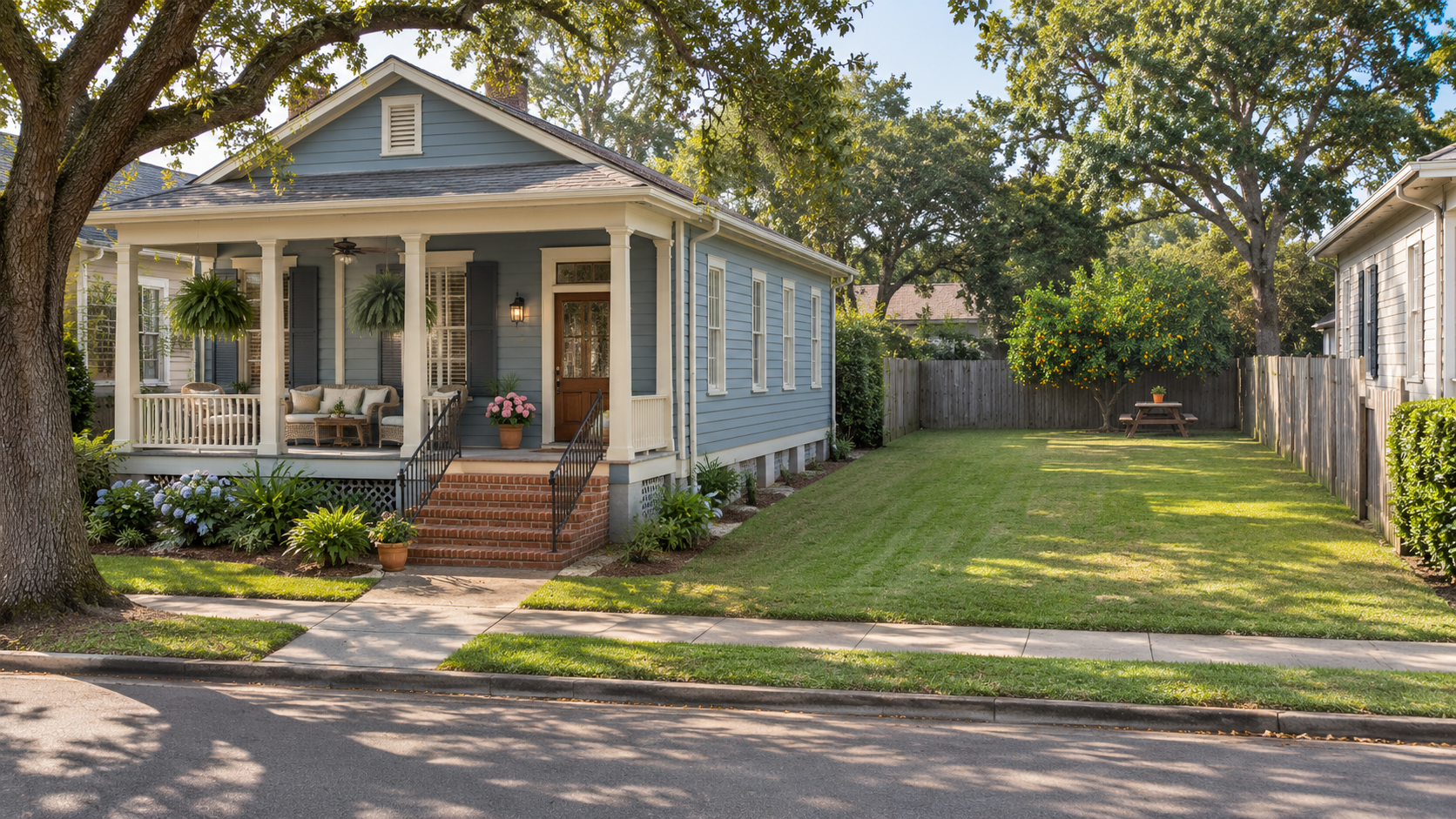
Imagine you bought the empty lot beside your Lakeview home years ago. You moved the fence, planted a satsuma tree, and made room for a long table at crawfish boils. Now you’re thinking about selling, and a builder wants to buy the side yard. Before you answer, picture the first showing after that sale. Where would buyers park? What would they see from the kitchen? Would they still pay the price you had in mind for the house?
Sell together when the yard adds more to the home than you could clear by selling it separately. Consider two sales when the lot can be conveyed independently, there’s evidence of demand for it, and the house still works well on its own. To tell which applies, you’ll need a survey and three price estimates.
Start with what you actually own
Pull the act of sale for the house, the act for the extra land if you bought it later, and the most recent survey. Ask a Louisiana real estate attorney or your title company to review the legal descriptions and identify any recorded restrictions, rights of passage, or mortgage covering both properties. If you’ve owned the home for years, our guide for longtime New Orleans homeowners preparing to sell can help you organize those records.
Look up the zoning district in the City of New Orleans Property Viewer. The map gives you a place to start. Use a surveyor to locate the boundary on the ground, especially if a garage, driveway, or pool sits close to the line.
Ask City Planning two questions before you advertise a homesite: Can these lots be conveyed separately as they stand? What could a buyer actually build on the vacant piece? The answers can differ. New Orleans has district-specific rules for undersized lots. In certain Lake Area districts, adjoining lots under common ownership that have historically served as one site can be treated as a single parcel for zoning purposes if a lot falls short of width or area requirements. If a line needs to move, ask what approvals would be required and whether the remaining house lot would also comply. See Section 25.5 of the city’s zoning ordinance and the City Planning Commission’s subdivision resources.
Get three estimates before you set a price
Ask your agent for three figures: the house and land together, the house on its remaining lot, and the vacant lot on its own. Each figure needs its own comparable sales. Our guide to estimating what a New Orleans home is worth explains why the block and the way a property lives matter to that comparison.
- For the package, look for homes that sold with similarly usable outdoor space. A side yard accessible from the kitchen makes a different impression from an equally large strip behind a detached garage.
- For the house alone, walk the property as if a fence already stood on the sale line. If the driveway goes with the lot, compare the house with homes that have the same parking arrangement buyers would inherit.
- For the land, compare closed lot sales with similar frontage, depth, access, and verified development options. A nearby lot wide enough for a buyer’s preferred floor plan may be a poor comparison for a narrow side yard.
What would two closings actually earn you?
Suppose the house and yard could sell together for $550,000. Sold separately, the house might bring $450,000 and the land $125,000. That sounds like a $25,000 reason to split. Here is how quickly the advantage can narrow. These figures illustrate the math and are independent of current Lakeview prices.
| Illustrative comparison | Sell together | Sell separately |
|---|---|---|
| Total sale price | $550,000 | $575,000 |
| Assumed selling, preparation, and carrying costs | $30,000 | $48,000 |
| Proceeds before loan payoff and income taxes | $520,000 | $527,000 |
Under those assumptions, selling separately earns an extra $7,000. If the house still brings $450,000 and costs stay the same, the land must bring $118,000 just to break even. That’s a useful number to have when the builder calls with an offer. Replace the assumptions with actual quotes for survey work, fence or driveway changes, closing expenses, and the cost of holding whichever property sells last. Our New Orleans seller net proceeds guide walks through the other items to include on your net sheet.
Choose the order before you accept an offer
If you sell the lot first, decide how you’ll describe the remaining yard, parking, and access when you list the house. If you sell the house first, show buyers exactly where their purchase ends and how you’ll reach the land you keep. In either case, ask your lender about its partial-release terms if the mortgage covers both pieces. Find out how much of the first sale’s proceeds the lender would require before committing to a closing date.
If the numbers are close, your plans can settle the question. One closing might let you buy your next home on time. Two sales might suit you if you can comfortably carry the second property and a land buyer is already prepared to close. Before counting on that buyer, read the offer for any feasibility period, approval contingency, or right to cancel.
What if the neighbor makes the first offer?
Ask what they intend to buy and on what terms. A neighbor who wants garden space may value the land differently from a builder whose offer depends on getting a particular plan approved. Compare each written offer with your break-even figure, then weigh the time and conditions attached to the price.
Frequently asked questions about selling a New Orleans home with an extra lot
The lot next door has its own tax bill. Can I sell it separately?
Start with the legal description in your act of sale. Ask your title company or a Louisiana real estate attorney to check it against the recorded plans and your survey. Then ask City Planning whether the existing lot lines can stay as drawn and what the buyer could build there. A separate tax bill alone leaves both questions open.
How much would losing the side yard take off my home’s price?
Walk the house as a buyer would after the lot is sold. If the side gate leads to your only off-street parking, look at nearby closed sales of homes with street parking. If the house keeps its driveway and a usable backyard, a different set of sales may fit. Ask your agent to price the house in that condition before you respond to an offer for the land.
Can I sell the house now and keep the lot for later?
Potentially. Have the title and survey reviewed first, and walk the route from the street to the land you plan to keep. If reaching it would mean crossing the driveway you’re selling, resolve access before listing. Give buyers a survey that clearly identifies the land included in the house sale.
What if my mortgage covers both the house and the lot?
Before agreeing to sell either piece, ask your lender whether it will release that piece from the mortgage. Request the terms in writing, including any required payment, fees, and processing time. Use those figures to estimate how much cash you’ll have after the first closing.
How do I know whether a builder’s offer for my side lot is high enough?
Start with what you expect to clear by selling everything together. Subtract the expected sale price of the house alone, then add the total costs of selling separately. In the example above, that’s $520,000 minus $450,000 plus $48,000, or a break-even lot price of $118,000 before loan payoff and income taxes. If the builder asks for time to investigate the site, include the cost of that wait and check when the buyer can cancel.
Thinking about selling a New Orleans home with the lot next door? Ask Josh Raymond at Raymond Real Estate for a side-by-side pricing review. Send the address, a survey if you have one, and a note about how you use the yard today. We’ll compare the house with and without the land so you can see what each choice could put toward your next move.
Check out this article next