

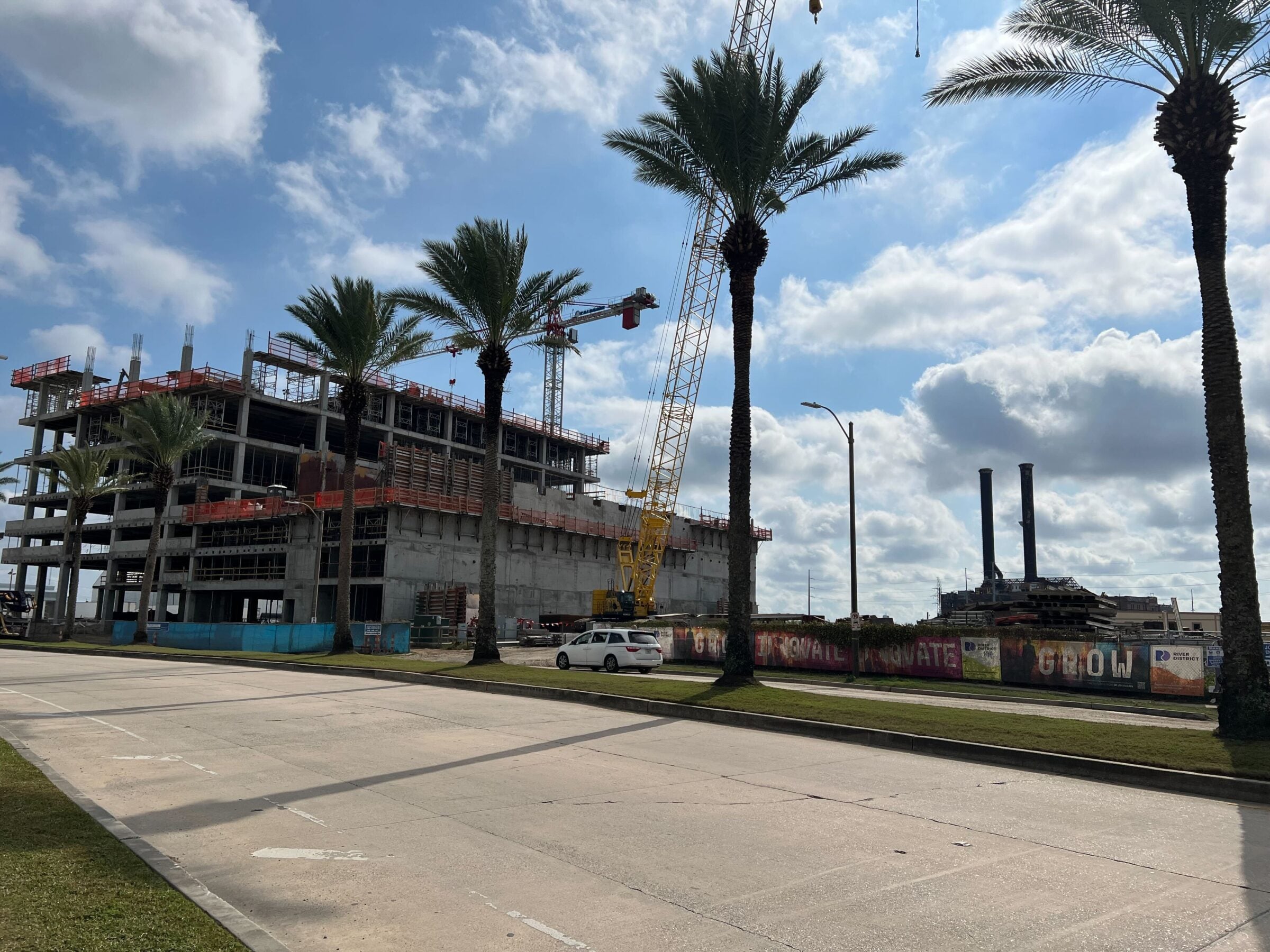
New Orleans' River District Is Taking Shape: What Nearby Condo Owners Should Know
New Orleans has always been a city that knows how to reinvent itself without losing the character that makes it special. From the historic French Quarter to the transformed warehouses along Julia Street, some of the city's most desirable neighborhoods have evolved by finding new uses for old spaces.
Now, another transformation is taking shape along the Mississippi River.
The New Orleans River District, a major mixed-use development adjacent to the Ernest N. Morial Convention Center, is beginning to move beyond ambitious plans and into tangible progress.
For condo owners in the Warehouse District, Central Business District (CBD), and Lower Garden District, this project represents more than another construction site. It could influence how people experience downtown living, what amenities attract future buyers, and how certain properties are positioned in the real estate market.
And with significant development milestones occurring in October 2026, the conversation is becoming increasingly relevant.
What Is the New Orleans River District?
The River District is a roughly 39-acre redevelopment project designed to transform largely underutilized land near the Convention Center into an active, mixed-use neighborhood.
Located between the Warehouse District, Lower Garden District, and Mississippi River, the project envisions a combination of residential housing, offices, restaurants, retail, entertainment, cultural attractions, and public gathering spaces.
The broader goal is to create a neighborhood where people can live, work, and enjoy New Orleans within a connected urban environment.
For a city celebrated for its walkable neighborhoods and distinctive lifestyle, that vision is particularly appealing.
Rather than simply extending downtown with more office buildings, the River District development aims to establish a more complete neighborhood.
That distinction matters to existing condominium owners because the value of an urban residence is influenced by more than the space inside its walls.
The surrounding neighborhood is part of what buyers are purchasing.
October 2026 Brings Another Important Development Milestone
One of the latest signs of progress involves the planned Rivana apartment community.
According to an October 14, 2026 report from Canal Street Beat, the Ernest N. Morial New Orleans Exhibition Hall Authority sold approximately 2.7 acres at Tchoupitoulas and Euterpe streets to the project's developer for approximately $1.19 million.
The property is designated for the planned 220-unit Rivana residential development.
This transaction is significant because it represents the transfer of land to support an actual residential project, rather than simply another announcement about future development.
Providence Community Housing has also announced the closing of the Rivana project and reports that construction is scheduled to begin in October 2026, with completion anticipated in August 2028.
The proposed apartments will provide 220 income-restricted rental residences, serving households earning at or below 80% of area median income.
While these will be rental apartments rather than condominiums, the project is an important component of building a residential community within the River District.
Additional residents could eventually help support nearby retail, dining establishments, and neighborhood services.
For existing downtown condo owners, that is an important part of the bigger picture.
Shell's New Office Building Could Bring More Activity Downtown
Another significant development is Shell Riverside, the company's planned New Orleans headquarters in the River District.
Construction began in 2025, and the approximately 142,000-square-foot office development is expected to be completed in 2027.
The building represents a notable investment in downtown New Orleans and is expected to bring a major corporate presence to the emerging district.
Why should condo owners care?
Because employment centers and residential real estate often have a meaningful relationship.
Some professionals prefer living near their offices, particularly when that location also offers restaurants, entertainment, fitness facilities, and convenient access to other parts of the city.
New Orleans already offers several attractive downtown residential options, from converted historic warehouses to luxury condominium buildings.
A growing concentration of office activity could introduce more potential residents to those neighborhoods.
That does not guarantee higher condo prices or immediate demand. However, it creates another reason for certain buyers to consider the Warehouse District and surrounding areas.
Could the River District Make Nearby Condos More Desirable?
This may be the most important question for existing owners.
The answer depends on how the development progresses, the specific condo building, and what future purchasers value.
Still, several potential benefits deserve attention.
1. More Restaurants, Retail, and Everyday Conveniences
One of the biggest attractions of condo living is convenience.
Imagine being able to leave your residence, enjoy dinner nearby, meet friends for a drink, walk along the riverfront, or attend an event without planning an entire evening around driving and parking.
The Warehouse District already offers many of those advantages.
Additional businesses and neighborhood amenities in the River District could expand those options.
For condo owners, that may strengthen the lifestyle appeal of their location.
And lifestyle is often a significant factor in condominium purchasing decisions.
2. A More Connected Downtown Experience
Downtown New Orleans is made up of distinct neighborhoods, each with its own identity.
The French Quarter offers history and entertainment. The CBD brings offices, hotels, and urban conveniences. The Warehouse District combines historic architecture with galleries, restaurants, and condominium living.
The Lower Garden District offers a different residential atmosphere just upriver.
The River District is envisioned as a connection among these areas.
If its pedestrian improvements, public spaces, and neighborhood amenities are successfully delivered, residents may eventually enjoy more ways to move between downtown destinations.
For someone shopping for a condo, that could make an already convenient location even more attractive.
3. Greater Visibility for Downtown Residential Living
Major redevelopment projects attract attention.
As new buildings take shape, businesses open, and more residents move into an area, potential purchasers may begin exploring neighborhoods they had not previously considered.
This could benefit existing condominium communities that offer features such as secure parking, balconies, river views, attractive common areas, and professional building management.
However, not every condo will benefit equally.
Buyers will continue to evaluate individual properties based on condition, layout, building finances, insurance costs, and monthly association dues.
As discussed in our article, Why Some New Orleans Condos Sell Fast — While Others Sit for Months, the quality of the building and the overall ownership experience remain essential.
What About Property Values?
It is tempting to assume that major development automatically causes surrounding real estate prices to rise.
The reality is more nuanced.
Neighborhood improvements can support buyer interest, but condominium values depend on several overlapping factors.
These include the quality of nearby amenities, supply and demand, mortgage financing, insurance expenses, association finances, and the condition of competing properties.
For example, two condos in the same neighborhood may perform very differently if one building has healthy reserves and desirable amenities while the other faces deferred maintenance or large special assessments.
Likewise, a residence overlooking an active construction site may face short-term drawbacks even if the surrounding neighborhood improves over time.
The River District should therefore be viewed as a potentially positive neighborhood development, not a guaranteed appreciation strategy.
Owners who want a clearer picture of their property's position should examine recent comparable sales and current competition.
Our guide to New Orleans Condo Inventory Trends explains why individual downtown buildings often behave differently from the broader market.
Should Downtown Condo Owners Sell Now or Wait?
For some owners, the River District's progress may raise an interesting question:
Would it make more sense to sell now, or hold onto a property while nearby development continues?
There is no universal answer.
An owner who has substantial equity and plans to relocate may have an excellent reason to sell today.
Another owner who enjoys the property, has manageable monthly expenses, and intends to remain in New Orleans may prefer to continue enjoying the residence while the surrounding neighborhood evolves.
The important thing is to avoid making the decision based solely on expectations of future development.
A thoughtful selling strategy should consider the property's current market value, ongoing carrying costs, the owner's financial goals, and the timing of any planned move.
Buyers and investors should take a similarly careful approach. Our article, Are Condos a Good Investment in New Orleans?, explores the financial considerations that matter beyond location alone.
What Condo Owners Should Watch as Construction Continues
The River District is a long-term redevelopment effort. Some projects are advancing while other components remain subject to financing, approvals, or changes in development plans.
For owners in nearby neighborhoods, the most useful approach is to follow actual progress rather than relying exclusively on future renderings.
Particularly important developments to monitor include:
Construction and access: Temporary traffic changes, noise, parking availability, and pedestrian routes.
Commercial openings: New restaurants, shops, and services that improve the daily residential experience.
Residential development: The timing and mix of apartments and any future condominium projects.
Public spaces: Improvements to streetscapes, gathering areas, and access to the riverfront.
Condo market activity: Changes in comparable sale prices, listing inventory, days on market, and buyer interest.
Owners should also continue paying attention to their own condominium associations.
A neighborhood can become more attractive while an individual building faces rising expenses.
Understanding New Orleans Condo Fees and the possibility of Special Assessments remains essential.
A New Opportunity for Warehouse District and Lower Garden District Living
One of the exciting aspects of New Orleans real estate is the city's ability to combine its historic identity with new development.
The Warehouse District is a perfect example.
Buildings that once served commercial and industrial purposes now contain beautiful residences, galleries, restaurants, and modern amenities.
That transformation helped create one of the city's distinctive urban residential environments.
The River District represents another opportunity to build upon that evolution.
For residents who love the convenience of downtown living, additional activity and investment could make the surrounding neighborhoods even more compelling.
The benefits will depend on what ultimately gets built and how successfully the new development integrates with existing communities.
But the progress already underway is giving condo owners another reason to pay attention to the future of downtown New Orleans.
Frequently Asked Questions About the New Orleans River District
Where is the New Orleans River District located?
The River District is located adjacent to the Ernest N. Morial Convention Center along the Mississippi River, between the Warehouse District and Lower Garden District. The development covers approximately 39 acres of formerly underutilized land.
Will the River District increase nearby condo values?
It could improve neighborhood appeal by adding jobs, residents, amenities, and public spaces. However, there is no guarantee of increased property values. Individual condo performance will still depend on market conditions, building quality, association finances, and buyer demand.
Are new condos being built in the River District?
The broader development vision includes condominium and apartment residences. As of October 2026, the most clearly advancing residential component is Rivana, a 220-unit affordable rental apartment project. Buyers should distinguish confirmed projects from longer-term proposals.
Which New Orleans neighborhoods could be affected by the River District?
The Warehouse District and Lower Garden District are among the closest existing residential areas. Parts of the CBD and the Convention Center corridor could also experience changes in amenities, pedestrian activity, and buyer interest.
Is now a good time to buy a condo in the Warehouse District?
That depends on the specific property, its price, monthly carrying costs, association finances, and the buyer's goals. Planned neighborhood development can be an attractive consideration, but purchasing decisions should be based primarily on the property's merits and current market conditions.
The Bottom Line: New Orleans Is Continuing to Invest in Its Future
New Orleans has never been a city that stands still.
Its neighborhoods have evolved for generations, blending historic architecture, cultural traditions, and new ideas into places people genuinely want to live.
The River District is another chapter in that story.
With Shell Riverside under construction and Rivana moving toward its construction phase, the development is beginning to establish a more visible presence along the riverfront.
For nearby condo owners, this is a development worth following closely.
For buyers, it offers another reason to explore what downtown New Orleans condominium living has to offer.
And for the city, it represents an opportunity to connect established neighborhoods with new residential, commercial, and cultural activity.
Thinking about buying or selling a condo near the River District?
At Raymond Real Estate, we help buyers and sellers navigate the New Orleans condominium market with a focus on location, building quality, current market conditions, and long-term ownership considerations.
Whether you own a condo in the Warehouse District, CBD, or Lower Garden District—or are considering purchasing one—understanding what your property offers in today's market is the first step toward making a confident decision.
Contact Raymond Real Estate at 504-256-7877 to discuss your condo's value or explore available properties.
Development information current as of October 15, 2026. Project schedules and plans are subject to change.
Check out this article next