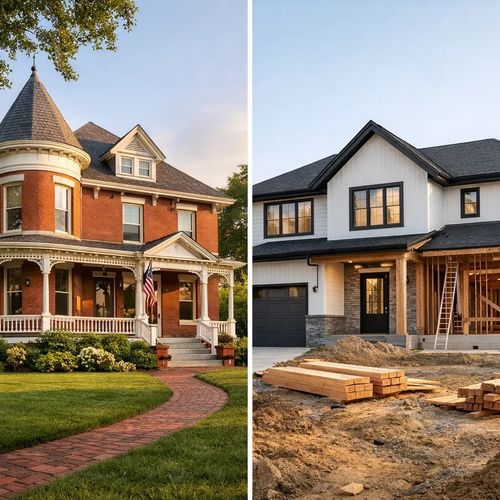


A shotgun on a quiet Uptown block, a condo in the Warehouse District, and a renovated Lakeview home can all sit in the same metro market and behave very differently. That is why new orleans housing market trends are best understood at the neighborhood level, not just through one headline number.
For buyers and sellers, that distinction matters. New Orleans is a market with historic housing stock, highly specific block-by-block appeal, insurance and ownership cost considerations, and a wide spread in pricing depending on property type. The result is a market that rewards strategy. If you are making a move this year, the question is not whether the market is simply hot or cold. The better question is where conditions are tightening, where leverage is shifting, and how to position yourself accordingly.
What the New Orleans housing market trends are showing now
The broad pattern is more balanced than the frenzy many people associate with the past several years. Buyers are generally seeing more choice than they did during the peak of ultra-low inventory, while sellers are still benefiting from the fact that desirable homes in strong locations continue to attract serious attention. That balance, however, comes with nuance.
Well-priced homes that are updated, visually compelling, and located in sought-after neighborhoods can still move quickly. Properties that need work, feel overpriced for their condition, or carry monthly costs that stretch affordability may sit longer and require price adjustments. In other words, the market is rewarding preparation and realism more than momentum alone.
Interest rates remain a major factor in buyer behavior. Even when rates stabilize, affordability changes the shape of demand. Some buyers who might have stretched for a larger single-family home are looking more closely at condominiums or smaller properties in highly walkable areas. Others are expanding their neighborhood search to capture better value. Sellers need to recognize that buyers are often calculating the full monthly payment with greater scrutiny than they did a few years ago.
Inventory is improving, but not evenly
One of the most meaningful shifts in recent New Orleans housing market trends is the return of more inventory in certain segments. That does not mean every buyer suddenly has endless options. It means the pressure is no longer identical across all price points and property categories.
Entry-level homes that are move-in ready can still draw strong competition, especially in neighborhoods where inventory remains naturally limited. Mid-range properties may see a more measured pace, with buyers taking time to compare options. In the luxury space, timing often depends on presentation, pricing discipline, and how specifically the home matches the buyer pool.
Condos deserve their own lens. In some parts of New Orleans, condominium inventory can provide an appealing alternative for buyers who want location and lifestyle without the maintenance demands of a detached historic home. At the same time, condo buyers tend to be highly detail-oriented. HOA fees, building reserves, insurance, and special assessments all affect value perception. A condo that looks attractive on price alone may feel less competitive once the full ownership picture is clear.
Pricing is holding, but buyers are more selective
The phrase many people want to hear is whether prices are up or down. The more useful answer is that pricing resilience depends on quality, location, and credibility.
In New Orleans, buyers tend to pay a premium for homes that solve problems upfront. Updated systems, thoughtful renovations, off-street parking, functional layouts, and flood-risk clarity can all strengthen pricing. Historic charm still matters, of course, but charm without practical improvements can create hesitation. A beautiful older home may command strong interest, but buyers are weighing deferred maintenance more carefully than before.
That is why overpricing is especially risky in the current environment. When a home comes to market above where buyers see value, it often loses momentum quickly. Days on market can stretch, and later reductions may not fully restore the sense of urgency that a well-priced launch can create. Sellers who want strong outcomes should think less about testing the market and more about entering it with purpose.
For buyers, selectivity creates opportunity. If a property has lingered and the seller is motivated, there may be room to negotiate on price, closing costs, or repairs. But that leverage is not universal. The best homes still tend to command confidence from the market.
Neighborhoods matter more than the metro average
Real estate in New Orleans has always been hyperlocal, and current conditions make that even more obvious. Buyers comparing the Garden District, Mid-City, Lakeview, the Marigny, Algiers Point, and downtown condo buildings are not really comparing one market. They are comparing distinct micro-markets with different inventory patterns, buyer pools, architecture, and pricing logic.
Walkability, school access, commute convenience, storm resilience perceptions, and renovation quality all shape demand. In historic neighborhoods, buyers often accept smaller closets or less conventional layouts in exchange for character and location. In other areas, they may prioritize square footage, newer construction, and easier parking. Those preferences affect how quickly homes move and what buyers are willing to pay.
This is where local guidance becomes especially valuable. A price that looks ambitious in one neighborhood may be completely reasonable in another because the buyer expectations are different. Likewise, two homes with similar square footage can perform very differently if one has superior block appeal or a stronger renovation story.
What buyers should watch in 2026
If you are planning to buy, patience and decisiveness need to coexist. That may sound contradictory, but it is the reality of this market.
Patience matters because more inventory gives you room to compare options carefully. You can evaluate not just asking price, but total cost of ownership, likely repair exposure, neighborhood fit, and future resale appeal. This is especially important in New Orleans, where older housing stock can present hidden costs and where location affects lifestyle more dramatically than many cities.
Decisiveness matters because the most appealing homes still stand out quickly. When a property is priced correctly, presented beautifully, and located in a neighborhood with consistent demand, hesitation can cost you. The buyers who perform best are typically those who understand their financing, know their true priorities, and can act with confidence when the right opportunity appears.
It also helps to widen the lens beyond the obvious headline neighborhoods. Many buyers begin with one or two familiar areas and then discover better alignment in adjacent neighborhoods that offer similar character or convenience at a different price point. A refined search often produces better results than a rigid one.
What sellers should watch before listing
For sellers, the current market favors preparation over assumption. The days of minimal effort producing maximum return are less reliable than they once were.
Presentation matters. Professional marketing, polished photography, thoughtful staging or styling, and a clear narrative around the home's strengths can materially affect buyer response. In a city where architecture and ambiance carry emotional weight, presentation is not cosmetic. It shapes perceived value.
Pricing matters even more. Buyers are watching the market closely, and they can recognize when a home is reaching beyond its segment. Strategic pricing does not mean underpricing. It means understanding what today’s buyer will pay for this property, in this condition, on this block, with these carrying costs.
Pre-listing preparation can also pay off. Addressing deferred maintenance, clarifying insurance details where possible, and organizing documentation for renovations or major system updates can reduce buyer uncertainty. The smoother the information flow, the stronger the seller’s position tends to be.
For homeowners in higher-end or highly specific niches, the buyer pool may be smaller, but that does not mean demand is weak. It means the marketing and positioning need to be precise. Raymond Real Estate’s concierge-style approach fits that reality well because premium results often come from disciplined strategy, not just exposure.
The wildcard factors shaping the market
New Orleans does not operate in a vacuum. Insurance costs, lending conditions, local infrastructure perceptions, and broader economic confidence all affect how buyers and sellers behave. These pressures do not hit every property equally.
For example, a home with updated systems and a stronger risk profile may feel far more approachable than a similar home with unanswered cost questions. Likewise, buyers relocating from other markets may have a very different view of value than long-time locals who are benchmarking against prior pricing cycles. Understanding who the likely buyer is matters almost as much as understanding the house itself.
There is also a lifestyle component that keeps New Orleans distinctive. People do not buy here based on spreadsheets alone. They buy for architecture, culture, neighborhood identity, and daily rhythm. That emotional layer helps sustain demand in many corners of the market, but it does not erase the importance of disciplined numbers. The strongest decisions account for both.
Where the market may be headed
If current patterns hold, expect a market that continues to reward homes that are priced with precision and presented with intention. Buyers should continue to see more room for evaluation than they had during the most frenzied periods, but not necessarily deep discounts on the best inventory. Sellers should expect buyers to ask sharper questions and make more comparisons before committing.
That is not a sign of weakness. It is a sign of a market becoming more thoughtful. In a city as layered as New Orleans, that can be a healthy shift.
The smartest move right now is not trying to time the market perfectly. It is understanding your segment, your neighborhood, and your goals with enough clarity to act well when the opportunity is in front of you. Learn More
Check out this article next