

A New Orleans commute is rarely just a matter of mileage. A home that looks close to the Central Business District can feel far away after a bridge backup, a train delay, or a rainy afternoon on a heavily traveled corridor. For buyers comparing the best commuter neighborhoods New Orleans has to offer, the right answer depends on where work happens, when the commute occurs, and what kind of life you want waiting at home.
That is why commute-focused home searches deserve more than a map pin. Access to downtown, the Medical District, universities, Metairie, and major employment centers matters, but so do parking, flood history, walkability, school preferences, and the character of the housing stock. New Orleans rewards buyers who weigh the complete daily experience.
What Makes a New Orleans Neighborhood Commute-Friendly?
In a compact city, several neighborhoods can offer a manageable drive to the same workplace. The distinction is often the route. A buyer working downtown may prefer the direct access of Mid-City, while someone commuting to Jefferson Parish may value an easier path from Lakeview or Uptown. For a remote or hybrid professional, a neighborhood’s restaurants, green space, and ability to support a home office may carry just as much weight as travel time.
Before narrowing a search, consider your most frequent destination, your expected arrival time, and whether you need reliable off-street parking. Also account for the routes you will take during Carnival season, major events, severe weather, and ordinary rush hour. Streetcars and buses can be valuable parts of a transportation plan, particularly near downtown and university corridors, but most buyers should evaluate them as an added convenience rather than the only solution for a time-sensitive commute.
Best Commuter Neighborhoods in New Orleans by Lifestyle
Mid-City: Central Access With Everyday Convenience
Mid-City is one of the city’s strongest choices for buyers who need flexibility. Its central location creates practical access to the CBD, the Medical District, downtown hospitals, City Park, and many Uptown destinations. Depending on the exact address and traffic conditions, a drive downtown can be quite short, while major east-west routes help support commutes in several directions.
The neighborhood appeals to buyers who want a lived-in New Orleans setting rather than a purely residential enclave. You will find classic shotguns, cottages, doubles, renovated historic homes, and select condominium options. Proximity to the Lafitte Greenway, Bayou St. John, and City Park adds meaningful lifestyle value for people who want outdoor time built into their week.
The trade-off is that Mid-City varies block by block. Parking, street activity, elevation, and renovation quality require careful evaluation. A polished historic home may be compelling, but buyers should look closely at insurance considerations, drainage, maintenance needs, and the practical realities of the specific micro-location.
Uptown: A Refined Choice for Downtown and University Commutes
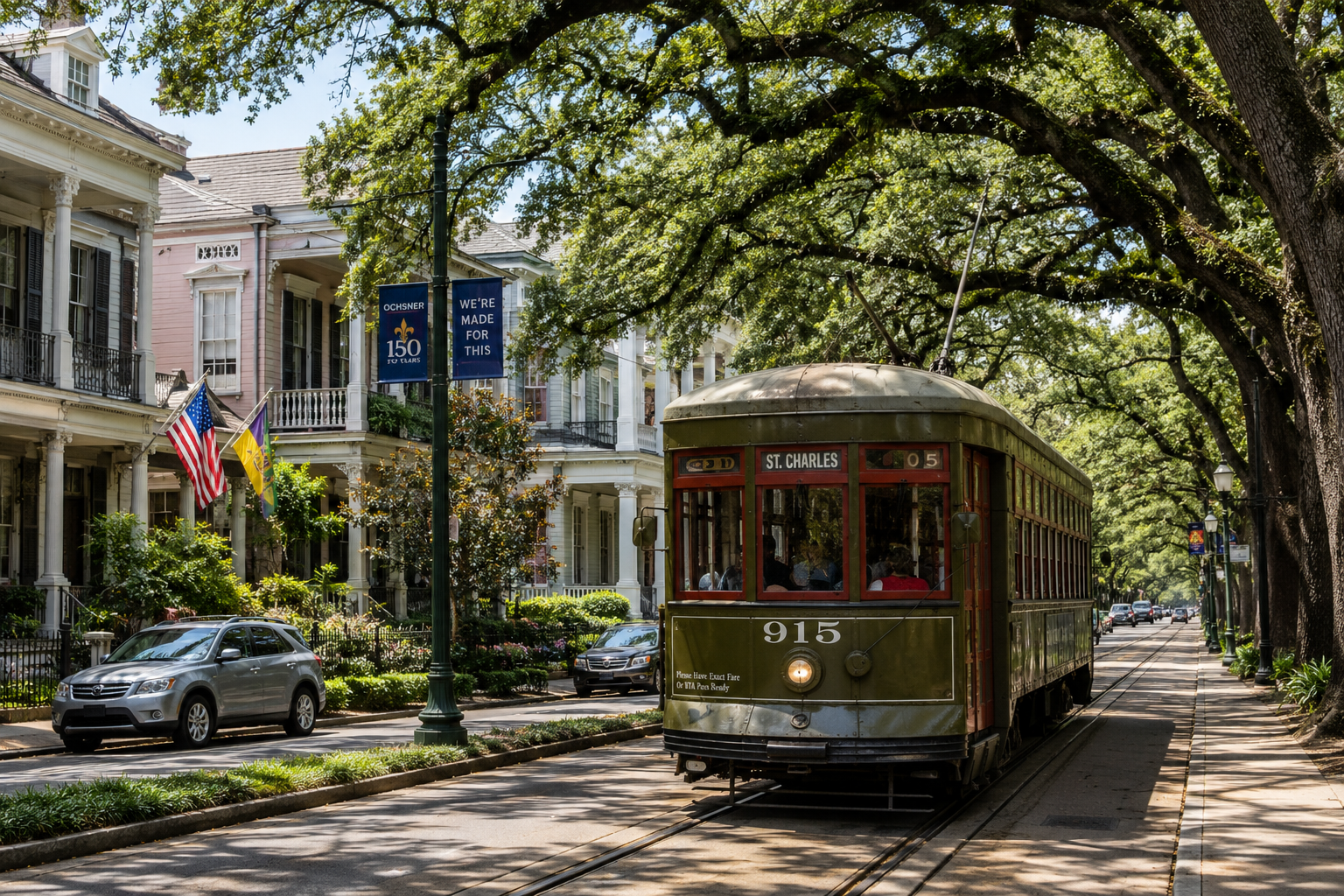
Uptown offers an appealing balance of established residential streets, architectural character, and access to downtown. It is especially attractive for professionals connected to the university corridor, the Garden District, the Warehouse District, and the CBD. St. Charles Avenue and nearby major corridors provide familiar routes, while the streetcar can be a pleasant option for select trips when timing is flexible.
Housing ranges from gracious historic residences and renovated Victorians to townhomes and condominiums. Buyers often choose Uptown for its walkable commercial areas, dining, schools, and mature tree canopy as much as for commute convenience. It is a neighborhood where coming home can feel distinctly separate from the pace of downtown work.
The consideration here is value. Highly desirable blocks and well-executed renovations can command a premium, and commute times can stretch when traffic builds around events, school zones, or major intersections. For buyers who work in Metairie or farther west, Uptown can still work well, but Lakeview may offer a more direct daily route.
Lakeview: Strong Access for Metairie and Downtown Professionals
Lakeview is a natural contender for buyers whose professional lives extend between New Orleans and Jefferson Parish. Its location near key connections to Metairie can make it especially convenient for commuters headed toward offices, healthcare campuses, retail centers, or other westbound destinations. Downtown is also accessible, making Lakeview a practical choice for households with more than one workplace.
The housing mix tends toward detached single-family homes, including post-Katrina construction, renovated properties, and larger homes that can support growing households or dedicated workspaces. The neighborhood’s broad streets, proximity to the lakefront, and neighborhood commercial areas give it a more relaxed residential rhythm than denser parts of the city.
Buyers should distinguish between areas within Lakeview carefully. Flood risk, elevation, insurance costs, property age, and construction standards can differ meaningfully. The best purchase is not simply the home with the quickest route - it is the property that aligns commute convenience with long-term carrying costs and confidence in the home itself.
Algiers Point and Algiers: Value and Downtown Proximity Across the River
For buyers who work downtown but want a different pace, Algiers deserves serious consideration. Algiers Point offers historic architecture, a strong sense of place, and access to the Mississippi River ferry for certain downtown trips. Other parts of Algiers can offer more space, newer construction, and value relative to comparable homes on the east bank.
The commute calculation here is highly personal. The ferry can be a compelling convenience for some downtown workers, while drivers need to be comfortable with bridge routes and the possibility of traffic variability. For a buyer whose schedule is predictable and whose workplace is in the CBD, the location can be remarkably practical. For someone who regularly travels to Uptown, Metairie, or multiple job sites, the river crossing may be less appealing.
Algiers is particularly worth exploring for buyers who want a home that feels residential and spacious without giving up access to the city’s core. It also illustrates an essential New Orleans principle: a commute should be tested at the time you will actually make it.
Bywater and Marigny: Ideal for Downtown-Centered Living
Bywater and Marigny suit buyers who want to remain close to the energy of downtown, the French Quarter, and the creative and hospitality employment centers nearby. Depending on the location and destination, walking, biking, or a short drive may be realistic. That proximity can reshape the workweek, reducing dependence on a car for errands, dinners, and social plans.
These neighborhoods are known for colorful historic homes, renovated cottages, doubles, and distinctive properties with character that cannot be replicated in a newer suburban setting. For buyers drawn to urban living, that architectural individuality is part of the appeal.
The trade-offs include narrower streets, variable parking, tourism-related activity in some areas, and a housing inventory where condition matters greatly. Historic properties can be exceptional homes, but they deserve a thorough review of systems, foundation conditions, insurance, and renovation history. A shorter commute should not lead buyers to compromise on due diligence.
Gentilly: Practical Space Near Medical and Education Hubs
Gentilly can be an excellent fit for buyers seeking more interior space, larger lots, and access to the University of New Orleans, Lakefront area, and portions of the Medical District. It also provides reasonable routes to downtown and eastern employment centers. For professionals who want room for a home office, guests, or a growing household, Gentilly often offers options that are harder to find in the city’s denser core.
The neighborhood includes a broad range of housing styles, from mid-century ranch homes to raised properties and renovated residences. Its quieter streets appeal to buyers who value a more traditional residential environment while staying connected to city amenities.
As with every neighborhood in New Orleans, property-specific research is central. Elevation, flood zone, insurance, roof age, and drainage should be evaluated alongside layout and price. A home that supports your daily routine and financial comfort is more valuable than one that simply appears close on a map.
How to Choose the Right Commuter Location
Start with the commute you will make most often, then assess your second-most frequent destination. A household with one person working downtown and another in Metairie may find Lakeview more balanced than a neighborhood optimized for only one driver. A buyer who works near hospitals or in the CBD may prioritize Mid-City, while someone who values walking to restaurants after work may prefer Marigny or Bywater.
Then visit at realistic times. Drive the route before work, after work, and after heavy rain if possible. Notice where you will park, how the streets feel after dark, and whether the route still works when an event changes traffic patterns. These practical observations often clarify a choice faster than online commute estimates.
A thoughtful home search should protect both your time and your standards. Raymond Real Estate helps buyers compare neighborhood fit, property condition, financial considerations, and the details that shape life after closing. The right neighborhood is not necessarily the one with the shortest commute - it is the one that makes the entire week work better. Learn More
Frequently Asked Questions About the Best Commuter Neighborhoods in New Orleans
What are the best neighborhoods in New Orleans for commuting downtown?
Mid-City, the Lower Garden District, Uptown, the Warehouse District, and areas close to the CBD are strong options for people who work downtown. The best choice depends on whether you plan to drive, use public transportation, bike, or walk. Mid-City is particularly central, with convenient access to both Downtown and Uptown.
Is Mid-City a good neighborhood for commuters?
Yes. Mid-City is one of the most centrally located residential areas in New Orleans. Residents have access to major roads, the Canal Street streetcar, the Lafitte Greenway, and multiple routes toward Downtown and Uptown.
What New Orleans neighborhoods are best for streetcar commuters?
Uptown, Carrollton, the Garden District, Mid-City, and parts of Downtown offer some of the most convenient streetcar access. The St. Charles line connects Uptown with the CBD, while the Canal lines connect Mid-City and City Park areas with Downtown.
Is Uptown New Orleans convenient for commuting?
Uptown can be an excellent choice, particularly for people working Downtown or near Tulane and Loyola universities. The St. Charles Avenue streetcar runs through the Uptown corridor toward Canal Street, while major streets provide additional driving and bus options.
Is Lakeview a good option for commuters?
Lakeview can work particularly well for buyers who prefer a more residential setting but still want reasonable access to Downtown. Driving is generally the primary commuting option, and Downtown is roughly a 15-minute drive under favorable traffic conditions.
Should I live in the CBD or Warehouse District if I work Downtown?
For someone whose priority is minimizing the daily commute, living Downtown can be difficult to beat. Depending on the location of your workplace, residents may be able to walk or bike rather than drive every day. The CBD and Arts/Warehouse District also put residents close to restaurants, entertainment, offices, and multiple transportation options.
Can I live in New Orleans without a car?
Yes, although the practicality depends heavily on the neighborhood and your workplace. Areas near Downtown and established streetcar corridors tend to provide the greatest flexibility. New Orleans' streetcar network connects Downtown with Uptown, Mid-City, City Park, the riverfront, and other destinations.
What should homebuyers consider besides commute time?
Buyers should consider parking, flood risk, homeowners insurance costs, property condition, proximity to transit, walkability, and access to everyday destinations. A neighborhood with a slightly longer commute may ultimately be a better fit if it provides the type of home, amenities, and lifestyle you want.
How can I determine the actual commute before buying a home?
Test the route during the hours you would normally travel. New Orleans commute times can change because of traffic, construction, weather, festivals, parades, and other events. Buyers considering public transportation should also check the specific bus or streetcar routes serving the property.
Does proximity to transportation affect New Orleans real estate?
Transportation access can be an important consideration for buyers, particularly those who work Downtown or want to reduce their dependence on a car. Properties near major commuting corridors, streetcar routes, bike infrastructure, and employment centers may appeal to buyers who place a premium on convenience.
Which New Orleans neighborhood is best for my commute?
There is no single best commuter neighborhood for everyone. A Downtown employee may prioritize the Warehouse District, Lower Garden District, or Mid-City, while someone working Uptown may prefer Carrollton, Riverbend, or another Uptown neighborhood. The best strategy is to compare your workplace, budget, preferred transportation method, and housing needs before narrowing your home search. Explore Areas
Check out this article next