
Buy the Location, Update the House: Finding Opportunity in a Dated New Orleans Home
An older kitchen, worn carpet, and a bathroom that needs refreshing can make a home easy to overlook. Yet behind those finishes, you may find generous windows, original woodwork, a useful floor plan, and a location that fits your life beautifully.
For buyers considering a dated home in New Orleans, that combination deserves a closer look.
The opportunity comes from recognizing which parts of a property can be improved, understanding the cost of those improvements, and paying a price that leaves room for the work. With careful evaluation, a home that needs updating can become a comfortable place to live with details you chose yourself.
Start With the Location You Want to Keep
Paint colors and appliances are relatively straightforward to change. The property’s address, lot, street, and surroundings are lasting parts of the purchase.
Begin by asking what you want from the location. Would you use nearby restaurants along Magazine Street? Does being close to City Park suit your routine? Would a particular Uptown, Mid-City, or Lakeview address make work, errands, or visits with friends easier?
Evaluate the actual property and block. Test your commute, investigate parking, and visit at different times. Review flood information, drainage concerns, and insurance options early.
A desirable location should work for your daily life as well as your budget. Our guide to comparing neighborhood lifestyles in New Orleans can help you define that fit before finishes distract you. nola-condos.com
Separate Dated Finishes From Major Repair Needs
The word “dated” describes appearance. It tells you very little about the roof, foundation, wiring, plumbing, or quality of previous work.
A home with older cabinets and well-maintained systems presents a different project from one with water damage and extensive deferred maintenance. Both may be worth considering, but they require different budgets and timelines.
Potentially manageable updates include paint, lighting, cabinet hardware, refinishing suitable floors, and replacing serviceable but unattractive finishes. Changing a layout, relocating plumbing, or opening walls can involve a much larger scope.
Have an inspector evaluate condition and ask qualified contractors to price your intended work. “Good bones” should become a set of findings you can understand.
For help weighing the alternatives, read Should You Buy Renovated or Fixer Upper Homes?. Raymond Real Estate
Put the Purchase Price and Project Budget Together
A lower asking price is useful only when the full purchase and renovation plan makes sense.
Build a budget that includes repairs, desired updates, permits, professional services, closing expenses, and any temporary housing or overlapping payments. Keep a separate reserve for unexpected work.
Here is an illustrative example:
| Budget item | Assumed amount |
|---|---|
| Purchase price | $325,000 |
| Planned repairs and updates | $45,000 |
| Closing, permit, and holding costs | $15,000 |
| Reserve for unexpected work | $10,000 |
| Total planned investment | $395,000 |
These figures illustrate the calculation. Use property-specific estimates and lender information for your purchase.
Next, compare that total with recent closed sales of genuinely comparable renovated homes. Match location, living area, layout, parking, lot characteristics, and renovation quality as closely as possible.
If the project’s total cost approaches the price of comparable finished homes, consider whether the customization is worth your time and effort. If there is more room between your budget and supported finished values, you may have a more promising opportunity.
That difference is a planning margin. It is not guaranteed equity or profit. Additional repairs, financing expenses, or changes in the market can affect the result.
Investigate the New Orleans Details Early
Older New Orleans homes deserve attention to how the structure and its systems function.
Your inspector’s findings may point to specialist evaluations of the roof, foundation or piers, electrical system, plumbing and sewer lines, HVAC equipment, moisture intrusion, or termite damage. Request available permits, invoices, warranties, and improvement records.
Insurance belongs in the early evaluation, too. Get quotes for the property in its current condition, explain your renovation plans, and ask whether coverage or closing depends on particular repairs. Include any flood coverage and relevant deductibles in your budget.
Our guide to the New Orleans “insurance-ready” home explains the documentation and property details that can help buyers obtain clearer answers. Raymond Real Estate
For an older property with significant architectural character, How to Buy a Historic Home in New Orleans provides additional questions to bring to your search. Raymond Real Estate
Preserve the Character That Attracted You
Updating a New Orleans home can be especially rewarding when the finished result still feels connected to its architecture.
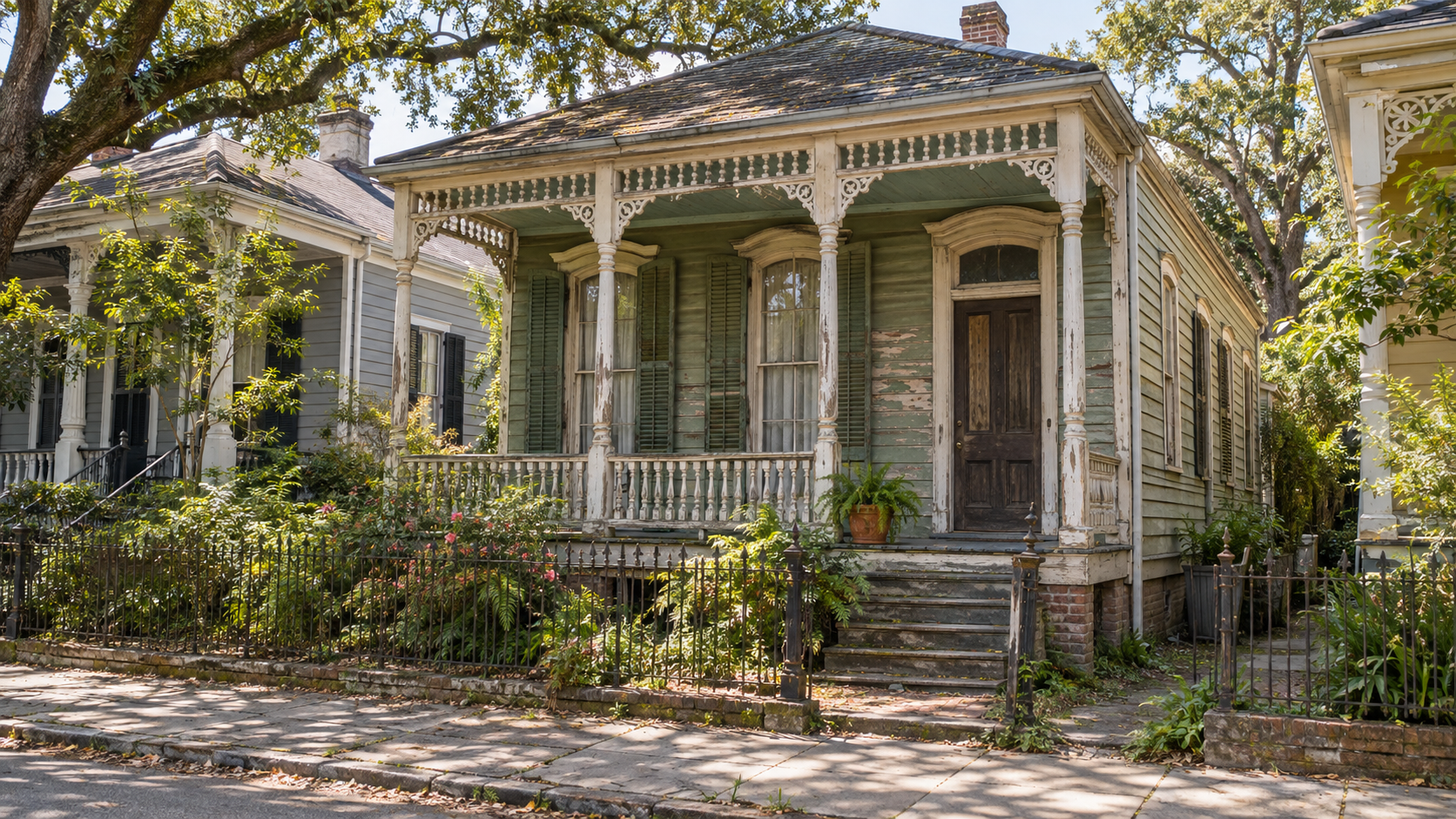
Original doors, millwork, wood floors, fireplaces, and tall windows may be worth retaining or restoring. A kitchen can gain better lighting and more useful storage while working with the home’s proportions. Thoughtful repairs to a porch can make an existing feature more enjoyable.
Before planning exterior changes, determine whether the address is subject to local historic oversight and which approvals apply. The city’s HDLC process includes checking district boundaries, reviewing guidelines, describing the proposed work, and obtaining required approvals and permits. City of New Orleans
Our Historic District Rules Guide for New Orleans Homes is a useful starting point. Confirm the requirements for your specific property before scheduling work.
Plan Improvements in a Practical Order
A dated home does not always require a complete renovation immediately. When the property is suitable for occupancy and your lender and insurer permit it, you may be able to update it in stages.
A practical sequence is:
- Address required repairs and building performance. Prioritize safety, active leaks, moisture problems, and essential systems, including anything required before closing.
- Make everyday living comfortable. Focus on the kitchen, bathrooms, storage, lighting, and spaces you use most.
- Refine the finishes. Add decorative details and optional upgrades as your budget and experience of the house develop.
Ask contractors which tasks should be combined. Repainting a room before necessary electrical work, for example, may mean paying for part of the job twice.
Living through a project also has a cost. Consider disruption, contractor access, pets, work schedules, and whether you will have a functioning kitchen and bathroom.
If your priority is settling in immediately, our article on the return of the move-in-ready home in New Orleans explores the appeal of a finished property.
Make an Offer Supported by the Work Ahead
An older bathroom does not automatically make a home overpriced. The asking price may already reflect its condition.
Use comparable sales, inspection information, and credible estimates to decide what you can pay comfortably. Structure the offer with time to investigate the property, obtain insurance information, and confirm financing.
Depending on the seller’s position and the transaction, negotiations may involve a price adjustment, agreed repairs, or lender-approved closing-cost assistance. Check how a proposed solution affects both your cash needs and any requirements for closing. Fannie Mae
Our guide to negotiating seller concessions wisely explains why the purchase price, credit, and financing should be considered together.
Know When the Opportunity Fits You
The most promising dated home offers a combination of:
- A location you want to keep.
- A layout that works or can be changed within a verified scope.
- Repair needs you understand.
- A realistic budget with room for uncertainty.
- Financing and insurance suited to the property.
- A project you have the time and willingness to manage.
Be careful about making the purchase depend on an unconfirmed addition, an assumed renovation discount, or a future resale price unsupported by comparable sales.
You can appreciate a home’s potential while deciding that another property better fits your resources. The useful outcome is a purchase you can carry through comfortably.
Frequently Asked Questions About Buying a Dated Home in New Orleans
Is buying a dated home a good investment?
It can be when the purchase price, repair scope, total costs, and comparable values support the decision. Dated finishes alone do not establish a bargain. Evaluate the property’s condition and your budget before assuming improvements will create equity.
Can I finance the purchase and renovations together?
Some mortgage products allow eligible buyers to combine a purchase and renovation financing. Fannie Mae’s HomeStyle Renovation mortgage is one example. Ask a participating lender about property eligibility, contractor requirements, project timing, insurance, and your qualifications before making an offer. Fannie Mae
Can I update the house gradually after moving in?
Sometimes. Cosmetic work may be phased when the home is suitable to occupy, but required safety, lending, or insurance repairs may need to happen sooner. Confirm the scope and timing with the relevant professionals.
Which updates should come first?
Start with required repairs, water management, and essential systems. Then prioritize improvements that make daily life comfortable. Use contractor guidance to coordinate tasks and avoid redoing completed work.
Should I renovate to the highest standard in the neighborhood?
Choose improvements that fit your needs and the home’s likely market position. Compare nearby finished sales before committing to expensive additions or finishes. Personal enjoyment can justify an upgrade, but you should understand that its cost may not be recovered at resale.
Find the Home Where Your Vision Makes Sense
A dated home can give you the opportunity to choose your finishes, preserve distinctive New Orleans details, and settle into a location you enjoy.
The strongest approach combines that vision with inspection findings, contractor estimates, financing, insurance, and comparable sales. When those pieces align, updating a house can be a rewarding way to create your next home.
Considering a dated home, a historic property, or a renovation opportunity in New Orleans? Contact Josh Raymond at Raymond Real Estate to compare properties, evaluate the numbers, and build a purchase strategy around your goals.
Check out this article next