

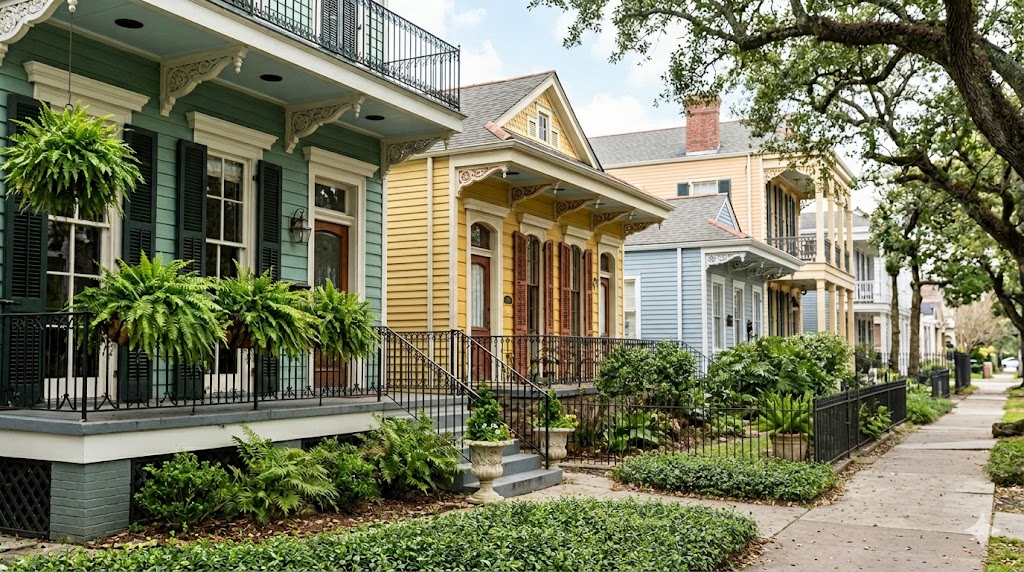
If you're asking, what is my home worth in New Orleans, you're already asking a smarter question than most sellers. In this market, value is rarely a simple number pulled from a national estimate. A raised cottage in Mid-City, a Garden District condo, and a renovated Uptown historic home can all follow very different pricing logic, even when they appear similar on paper.
That is because New Orleans is not a one-size-fits-all market. Architecture, flood zone, block-by-block desirability, renovation quality, parking, and even how a property lives day to day can materially affect value. The right pricing strategy starts with data, but it also requires local judgment.
What is my home worth in New Orleans? Start with the right lens
Home value is best understood as what a qualified buyer would likely pay in the current market, under current conditions, with comparable options available. That sounds straightforward, but in practice, several moving parts affect the answer.
A home's value is not the same as what you paid for it, what you need to net, or what a neighbor hopes to get for theirs. It is also not always the same as an online estimate. Automated valuation tools can be a useful starting point, but they often struggle in New Orleans because our housing stock is unusually varied. Historic homes, mixed-condition properties, doubles, conversions, and small differences in location can create wide pricing swings that algorithms miss.
For sellers, the most useful question is not just, what is my home worth in New Orleans, but what is my home worth right now, in this neighborhood, in this condition, to today's buyer pool.
The factors that shape home value in New Orleans
Location still leads the conversation, but in New Orleans, location works at a highly local level. Buyers do not just compare broad areas like Uptown or Lakeview. They compare street character, proximity to favorite commercial corridors, school access, walkability, parking, and flood risk. Two homes within the same neighborhood can command noticeably different prices based on those details alone.
Condition is the next major driver. Buyers pay a premium for homes that feel well maintained, thoughtfully updated, and move-in ready. Cosmetic improvements can help, but buyers also pay attention to the less visible items - roofs, HVAC systems, windows, drainage, foundation condition, and the quality of prior renovations. In older housing stock, craftsmanship matters. A renovation that respects the home's character and functions well tends to outperform a quick cosmetic flip.
Layout and livability also influence value more than many sellers expect. Square footage matters, but the way the space flows matters too. A home with strong natural light, usable bedrooms, functional storage, and an inviting kitchen may outperform a larger home with awkward circulation. In condos, factors like monthly dues, building condition, amenities, and reserve health can shape price just as much as the unit itself.
Then there is market timing. Even an excellent home can see different pricing outcomes depending on inventory levels, interest rates, and buyer confidence. In a more competitive market, buyers may stretch for the right property. In a slower market, pricing discipline becomes even more important.
Why online estimates often miss the mark here
Online home value tools tend to rely on broad public data, recent sales, and statistical modeling. That approach can work reasonably well in neighborhoods filled with near-identical homes. New Orleans rarely behaves that way.
A shotgun with preserved architectural details, a corner-lot camelback with off-street parking, and a renovated unit in a boutique condo building may all sit close together yet appeal to different buyers at different price points. Automated tools often cannot judge the nuance between average renovation quality and exceptional work, or between a merely good block and a highly sought-after one.
That does not mean online estimates are useless. They can give you a rough range. But when a homeowner is making a real selling decision, rough range is not enough. Pricing too high can lead to unnecessary market time and later price reductions. Pricing too low can leave value behind.
The best way to estimate what your home is worth
The strongest valuation usually begins with a comparative market analysis, often called a CMA. This reviews recently sold homes, active competition, pending sales where available, and expired or withdrawn listings that reveal where buyers pushed back.
In New Orleans, a CMA should be selective, not mechanical. The most relevant comparable sales are not simply the closest or most recent. They should reflect similar style, scale, condition, lot characteristics, and buyer appeal. A Creole cottage should not be valued like a newer suburban-style home just because the bedroom count matches.
A good valuation also accounts for where your property stands against current competition. If buyers can choose between your home and three others nearby, pricing has to make sense in that lineup. Sellers sometimes focus too heavily on closed sales and not enough on what buyers are seeing today.
If you want a more precise answer, an in-person walkthrough usually improves the estimate. Photos and public records rarely tell the full story. Finish quality, deferred maintenance, views, outdoor usability, ceiling height, and the feel of the home can all affect what buyers will pay.
What adds value - and what does not always pay off
Some improvements clearly help. Updated kitchens and baths, strong curb appeal, fresh paint, refinished floors, and polished presentation often support a higher sale price or faster sale. In many cases, simple preparation delivers better returns than major pre-sale construction.
That said, not every dollar spent comes back dollar for dollar. Highly personalized upgrades may not appeal broadly. Over-improving for the block can create a ceiling. And expensive projects with a long timeline may not make sense if your goal is to sell efficiently.
This is where strategic guidance matters. The right pre-listing plan focuses on improvements that make the home more marketable, not just more expensive. Sometimes the best move is a light refresh and expert staging. Sometimes it is more substantial work. It depends on the property, the neighborhood, and the likely buyer.
How neighborhood nuance changes the answer
New Orleans buyers are often buying a lifestyle as much as a house. That means neighborhood identity carries real weight. Walkability to restaurants and coffee shops may matter in one area, while lot size, parking, or newer construction may matter more in another. Historic charm can be a premium feature, but only when paired with enough comfort and function for modern living.
This is especially true in areas with mixed housing types. A condo buyer in the Warehouse District evaluates value differently from a buyer shopping for a family home in Lakeview. A seller in the Marigny may benefit from architectural appeal and location energy, while a seller in Old Metairie or Uptown may see stronger value tied to lot, finish level, and school-related demand.
That is why neighborhood-specific expertise is more than a branding phrase. It directly affects pricing accuracy.
Should you price at market value or slightly above it?
There is no universal rule. In some cases, pricing at fair market value creates the strongest response and can invite competitive offers. In others, there may be room to test slightly above the most conservative estimate if the home shows beautifully and inventory is limited.
The trade-off is exposure versus resistance. Buyers are highly informed, and overpriced listings tend to lose momentum quickly. Once a property lingers, even strong homes can develop a perception problem. The first days on the market usually matter the most, which makes launch pricing critical.
A refined strategy looks beyond your ideal number and asks how buyers will react in real time. That is where experienced local representation can protect both value and timing.
When to get a professional opinion on what your home is worth in New Orleans
If you are thinking about selling in the next six to twelve months, it is worth getting a professional valuation now. The earlier you understand your likely price range, the more time you have to make thoughtful decisions about repairs, timing, presentation, and your next move.
It is also useful if you are refinancing, dividing assets, planning an upgrade, or simply trying to understand your equity position. A credible valuation gives you options. It helps you move from guesswork to planning.
For homeowners who want clarity tailored to this market, a local brokerage with deep neighborhood knowledge can offer a much more useful answer than a generic estimate. Raymond Real Estate approaches valuation the same way it approaches representation - with local fluency, polished guidance, and a service standard designed to make major decisions feel more manageable.
The real value of a home is not just a number on a screen. It is a number supported by context, strategy, and an understanding of what buyers in New Orleans are willing to pay for this home, on this block, at this moment. Learn More
Check out this article next