

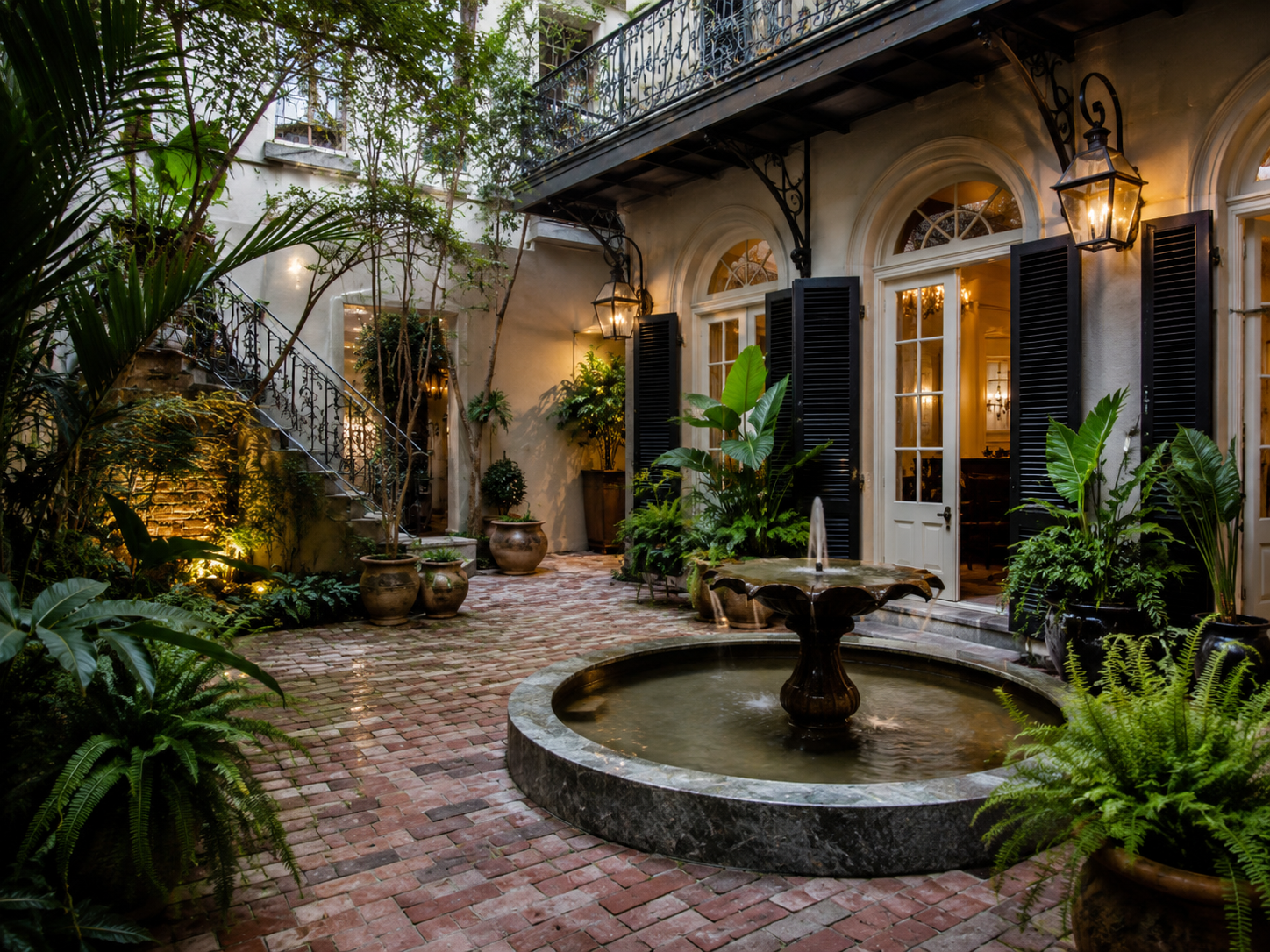
A courtyard can change the way a New Orleans home lives. Behind a Creole cottage, past a Center Hall’s formal rooms, or tucked beside a renovated double, it creates a private outdoor room shaped by brick, ironwork, jasmine, and shade. For buyers drawn to the city’s architecture and indoor-outdoor rhythm, new orleans homes with courtyards offer something a standard backyard often cannot: a sense of retreat in the center of the city.
That appeal is real, but courtyard ownership also calls for a closer look. Age, drainage, access, historic guidelines, maintenance, and neighborhood character can all affect how enjoyable - and valuable - the space will be. The right courtyard is not simply beautiful at a showing. It supports the way you want to live and fits the realities of the property.
Why Courtyards Matter in New Orleans
New Orleans was built for outdoor living long before it became a design trend. Deep lots, warm weather, dense historic neighborhoods, and the influence of French, Spanish, Caribbean, and Creole architecture made enclosed or semi-enclosed outdoor spaces a natural part of residential design.
A well-designed courtyard offers privacy without isolation. It can be a place for morning coffee, a quiet dinner, container gardening, or entertaining beneath string lights. In neighborhoods where homes sit close together, a courtyard often provides a more intimate and finished experience than an open lawn.
It also gives a property distinction. Buyers shopping historic homes frequently respond to spaces that feel original to the architecture rather than added as an afterthought. A brick courtyard framed by mature plantings and period-appropriate details can make a home memorable, particularly when comparable properties offer limited usable outdoor space.
Still, not every outdoor area marketed as a courtyard functions the same way. Some are generous entertaining spaces. Others are narrow side passages, shared patios, or charming but heavily shaded enclosures with little room for furniture. The details matter.
Where to Find New Orleans Homes With Courtyards
Courtyard homes appear across the city, but the style and scale of the space vary by neighborhood and property type.
French Quarter and Faubourg Marigny
The French Quarter is the classic setting for private brick courtyards, often concealed behind historic facades or entered through carriageways. These spaces can be exceptionally atmospheric, with balconies, fountains, old masonry, and lush plantings. They also may come with practical limitations, including shared walls, limited service access, historic-district regulations, and the maintenance needs of very old construction.
In the Marigny, buyers may find Creole cottages, doubles, and larger historic residences with more relaxed but equally distinctive outdoor areas. Courtyards here can feel less formal than those in the Quarter while still delivering the neighborhood’s signature architectural character.
Garden District, Lower Garden District, and Uptown
Larger historic homes in these neighborhoods may offer rear courtyards, garden patios, or side courtyards that connect to porches and guest spaces. A Garden District property might have a landscaped garden with a courtyard-like entertaining area, while an Uptown cottage may use a compact brick patio to extend its living space.
These neighborhoods can be especially appealing for buyers who want mature greenery and more breathing room without leaving the city. Lot size alone does not guarantee a better courtyard, however. A smaller, thoughtfully designed space can be more useful than a large yard with poor drainage or little privacy.
Bywater, Mid-City, and Other Historic Neighborhoods
Bywater and Mid-City offer a broad mix of renovated cottages, doubles, and newer infill homes. Here, courtyards may range from historic brick spaces to contemporary patios designed around outdoor kitchens and pools. Buyers can sometimes find more flexibility in layout and renovation style, although each property should still be evaluated for permits, drainage, and construction quality.
In newer condominium developments, a courtyard may be a shared amenity rather than a private feature. That can be an excellent fit for a buyer who wants the atmosphere of outdoor living without taking on all of the maintenance. It is important to review the condominium association’s rules, budget, and responsibility for landscaping, irrigation, gates, and exterior repairs.
What Makes a Courtyard Truly Livable
At a showing, it is easy to be persuaded by a fountain or beautiful climbing vines. Before making an offer, consider how the courtyard works at different times of day and in different seasons.
Start with light and shade. New Orleans heat makes shade valuable, but a courtyard with almost no direct sun may limit gardening, leave surfaces damp, and make the space feel cooler and darker in winter. Mature trees and surrounding buildings also affect how quickly the area dries after a storm.
Privacy deserves equal attention. Look toward neighboring balconies, windows, rooftops, and service areas. A courtyard can feel private from inside the home yet become exposed once you are outdoors. Fencing, walls, gates, and landscaping may help, but they can also be subject to neighborhood or historic-preservation requirements.
Access is another practical consideration. Ask how furniture, landscaping materials, bicycles, and maintenance equipment enter the space. In older properties, the only route may be through the home. That is manageable for many owners, but it changes the cost and effort involved in larger projects.
Finally, assess the relationship between the courtyard and the house. The best spaces feel connected to daily life through French doors, a kitchen, a living room, or a covered porch. If reaching the courtyard requires walking through a bedroom or down a narrow exterior path, it may be less useful than it first appears.
The Maintenance Questions Buyers Should Ask
Courtyards are often low on lawn care and high on detail. Brick pavers can shift over time. Mortar joints, stucco walls, iron gates, drains, fountains, and outdoor lighting all need regular attention. In a humid climate, moss, mildew, and invasive plant growth can quickly change the appearance and performance of the space.
Drainage should be a central part of your due diligence. During or after rainfall, look for standing water, low spots, loose pavers, water marks along walls, and drains that appear blocked or undersized. A courtyard is often enclosed by structures and walls, so water has fewer places to go. Proper grading and functional drainage are not cosmetic upgrades - they protect the outdoor space and the home itself.
For historic properties, ask what work has been completed and whether it was appropriate for the age and construction of the home. Original brick, old masonry walls, and cast-iron elements can be significant assets, but repairs should be performed carefully. A thorough inspection and, when warranted, input from specialists familiar with historic New Orleans homes can provide valuable clarity before closing.
Insurance and flood considerations also remain property-specific. A courtyard does not determine flood risk, but the lot’s elevation, drainage configuration, prior water history, and the home’s construction all deserve careful review. A knowledgeable local real estate advisor can help buyers frame the right questions, while inspectors and insurance professionals provide the property-specific answers.
Courtyards and Resale Value
A private outdoor space can strengthen a home’s market appeal, especially in walkable neighborhoods where buyers value a place to entertain, relax, or keep pets without sacrificing proximity to restaurants, parks, and culture. Yet resale value depends on execution.
A courtyard that is clean, functional, well-lit, and proportionate to the home can photograph beautifully and create an emotional connection during a showing. Conversely, cracked paving, overgrown landscaping, failing drainage, or a cluttered layout can make a high-potential space feel like a future expense.
For sellers, the goal is not to over-improve every inch. It is to present the courtyard as a complete extension of the home. Fresh landscaping, pressure-washed surfaces where appropriate, repaired lighting, attractive outdoor seating, and a clear path of travel can dramatically improve first impressions. In a historic setting, preserving the character that made the courtyard special in the first place is often more compelling than pursuing a generic renovation.
Finding the Right Fit
The right courtyard depends on your priorities. A buyer who loves entertaining may prioritize a direct connection to the kitchen, room for a dining table, and reliable lighting. Someone seeking a quiet primary residence may care more about privacy, shade, and low-maintenance materials. A second-home buyer may prefer a smaller enclosed space with simple landscaping, while an investor may focus on durability and guest appeal.
This is where neighborhood knowledge and property-level guidance matter. Raymond Real Estate helps clients evaluate not only the architecture and location of a home, but also how its features will perform in everyday ownership and future resale. In a market where no two historic properties are alike, that perspective can make a meaningful difference.
A courtyard should invite you outside, not hand you a list of surprises after closing. When the space is well maintained, properly drained, and aligned with your lifestyle, it becomes one of the most enduring pleasures of owning a home in New Orleans.
Frequently Asked Questions About New Orleans Homes With Courtyards Worth Seeing
Why are courtyards so popular in New Orleans homes?
Courtyards are a natural fit for New Orleans architecture and lifestyle. They create a private outdoor retreat while allowing homeowners to enjoy the city’s mild winters, lush landscaping, historic character, and indoor-outdoor style of living. In denser neighborhoods, a courtyard can also provide valuable outdoor space without requiring a large traditional yard.
Which New Orleans neighborhoods are known for homes with courtyards?
The French Quarter, Marigny, Bywater, Garden District, Lower Garden District, Uptown, and parts of the Warehouse District are excellent places to find homes, townhomes, and condos with courtyards. Historic properties in the French Quarter and Marigny are especially well known for hidden courtyards tucked behind relatively modest street-facing façades.
What features make a New Orleans courtyard special?
The most memorable courtyards often incorporate classic New Orleans details such as brick or flagstone paving, fountains, wrought-iron balconies, French doors, mature tropical landscaping, gas lanterns, covered galleries, and surrounding masonry walls. Some luxury properties also feature outdoor kitchens, plunge pools, fireplaces, and professionally designed gardens.
Are courtyard homes more expensive in New Orleans?
They can be. A well-designed private courtyard is a desirable feature, particularly in neighborhoods where outdoor space is limited. However, its impact on value depends on the property's location, condition, architectural quality, privacy, landscaping, and how functional the courtyard is for everyday use.
Can condos in New Orleans have private courtyards?
Yes. Some historic condo conversions, particularly in the French Quarter, Marigny, and Warehouse District, include private patios or courtyards. Others have beautifully maintained shared courtyards available to residents. Buyers should confirm whether the outdoor area is privately owned, a limited common element, or shared by the condominium association.
What should buyers inspect when considering a courtyard home?
Pay particular attention to drainage, grading, masonry, exterior walls, balconies, landscaping, irrigation, and water intrusion. Heavy New Orleans rainfall makes proper courtyard drainage especially important. Buyers should also understand who is responsible for maintaining shared walls, landscaping, or common courtyard areas.
Are courtyards practical during New Orleans summers?
Yes, although shade and airflow make a major difference. Courtyards with mature trees, covered galleries, ceiling fans, fountains, or shaded seating areas can remain surprisingly comfortable. Properties designed around a central courtyard may also benefit from doors and windows that visually connect the interior living spaces with the outdoors.
Do historic New Orleans homes usually have large courtyards?
Not necessarily. Some of the most impressive courtyards are relatively compact. Because many historic lots are narrow and deep, New Orleans architecture often uses space creatively. A smaller courtyard surrounded by brick walls, landscaping, balconies, and French doors can feel much more substantial and private than its actual square footage suggests.
What architectural styles commonly include courtyards?
Courtyards can be found with Creole cottages, Creole townhouses, Greek Revival homes, Victorian-era properties, historic townhomes, and converted commercial buildings. French Quarter Creole townhouses are especially recognizable for their enclosed interior courtyards and balconies.
Are New Orleans courtyard homes good for entertaining?
They can be exceptional entertaining spaces. Courtyards naturally extend the living area outdoors and can work well for dinners, cocktails, small gatherings, or quiet evenings. Homes with French doors opening directly from the kitchen or living areas into the courtyard often provide the strongest indoor-outdoor flow.
Is a courtyard better than a traditional backyard?
It depends on the buyer. A traditional backyard may provide more room for children, pets, or a large pool, while a courtyard typically emphasizes privacy, architecture, landscaping, and low-maintenance outdoor living. In historic New Orleans neighborhoods, the courtyard is often part of the property's overall character rather than simply additional yard space.
How can I find New Orleans homes with exceptional courtyards?
Courtyards are not always obvious from the street or even highlighted properly in online listings. Working with a local real estate professional who understands New Orleans architecture can help identify properties with private courtyards, hidden gardens, balconies, patios, and other distinctive outdoor spaces that might otherwise be overlooked. Learn More
Check out this article next