

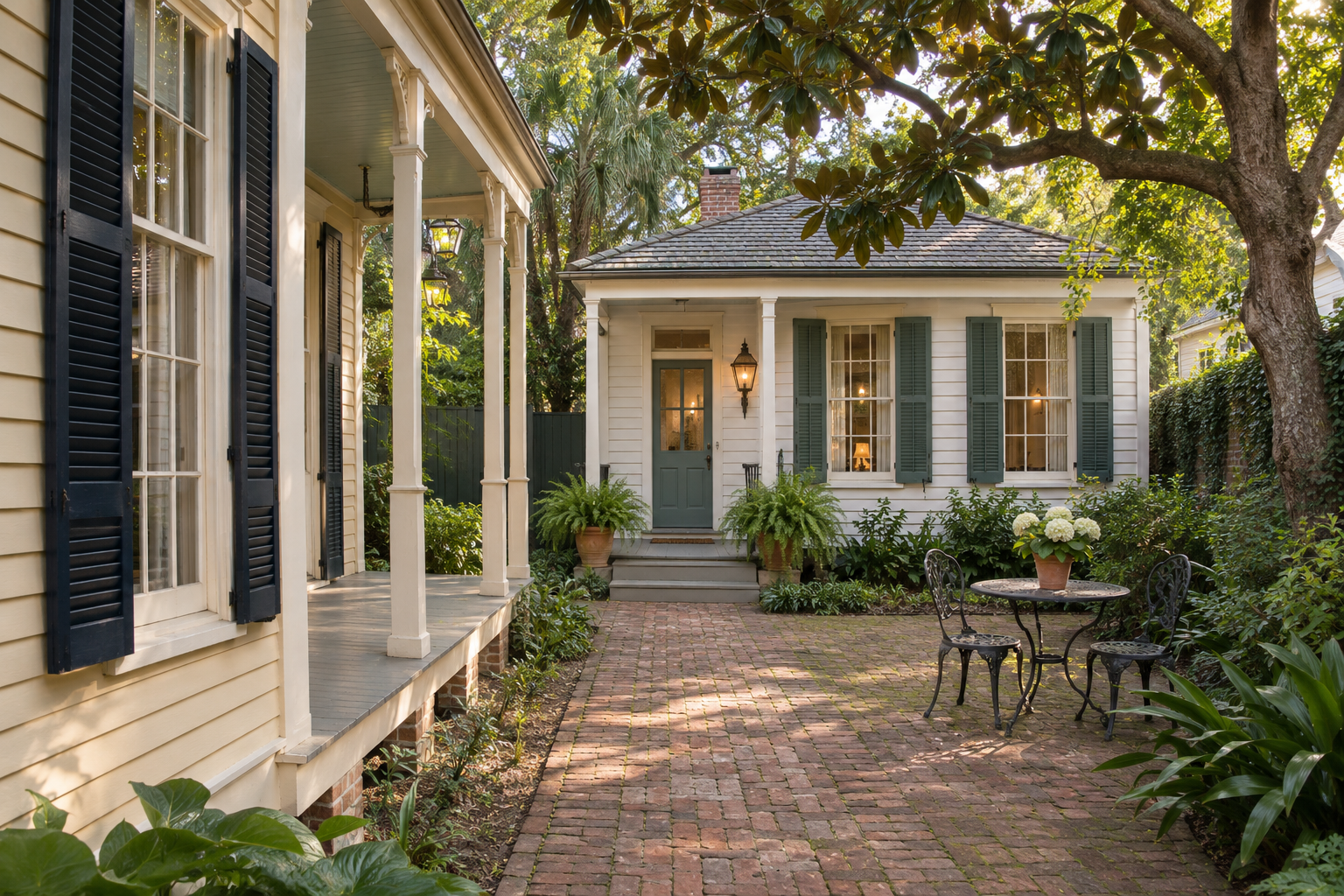
A courtyard, a shaded walkway, and a small cottage tucked behind the main house can make a New Orleans property especially appealing. It is easy to picture visiting family enjoying their own space, a parent living nearby, or a quiet office a few steps from the back door.
For buyers searching for New Orleans homes with guest houses, that flexibility can be a major part of the attraction. It also deserves a closer look before you agree to a higher purchase price.
The most useful question is: What can you legally, practically, and affordably do with the extra space?
Here is how to evaluate a guest house before making it the reason you buy.
1. Find Out What the “Guest House” Actually Is
Listing descriptions may use “guest house,” “rear cottage,” “studio,” and “garage apartment” loosely. Start by establishing the building’s approved use.
Ask for available permits, approved plans, inspection records, and occupancy documentation where applicable. Have the appropriate city department confirm whether your intended use is allowed. A bathroom, kitchen, separate entrance, or history of someone living there does not settle that question by itself.
The distinction matters. New Orleans’ zoning rules specifically prohibit using a shed as a dwelling unit. Adding attractive finishes does not establish permission for residential use. The city’s accessory-structure rules are one reason to investigate the records behind the description. City of New Orleans
If documentation is incomplete, ask what further research is needed before treating the space as a legal residence or rental.
For properties in historic districts, also investigate approvals for past work and any changes you want to make. Our historic district rules guide for New Orleans homes explains why the exact address and proposed project matter.
2. Decide How You Would Actually Use the Space
A guest house can be appealing even when rental income is not part of the plan. Its value to you depends on how comfortably it supports your daily life.
For visiting family, consider privacy, luggage access, and the walk between buildings during heavy rain. For an aging parent, look closely at stairs, thresholds, bathroom access, lighting, and the distance from the main house.
For a home office, test the internet connection, cooling, sound separation, and whether the arrangement provides the quiet you need. Confirm any applicable restrictions if the intended activity involves clients, employees, or other business use.
Walk the property as though you already live there. Would guests pass your bedroom windows? Would a tenant share your outdoor entertaining space? Does the extra building leave enough yard for the way you want to use it?
A useful layout can justify more consideration than an impressive room count.
3. Verify Rental Potential Before Counting the Income
A listing that mentions “income potential” should prompt questions about permitted use, realistic rent, and operating expenses.
Short-term rentals require particular care. New Orleans requires STR permits, and its short-term-rental zoning standards prohibit operating an STR in an accessory structure. Confirm the rear building’s formal classification and eligibility with the city rather than drawing conclusions from its appearance or a previous rental advertisement. City of New Orleans
A proposed long-term rental also needs confirmation that the building can lawfully be occupied and rented for that purpose.
Once the intended rental use is verified, prepare a conservative budget. Allow for vacancy, maintenance, utilities you would pay, insurance, management, and future replacements. Gross rent is only the starting point.
Our guide to how much cash flow a rental property should produce provides a framework for evaluating those expenses.
Also consider your household budget during periods when the space produces no income. That exercise helps show how much financial pressure the purchase would create.
4. Get Insurance Answers for Both Buildings
Give your insurance professional a complete description of the property and your intended use of the rear building.
Ask how the structure would be insured, whether the proposed limits reflect its replacement cost, and how coverage would change if family, tenants, or paying short-term guests occupied it.
The National Association of Insurance Commissioners warns that ordinary homeowners policies may exclude or limit coverage for home-sharing activities. Its home-sharing insurance guidance explains why rental plans should be discussed with the insurer in advance. content.naic.org
Flood coverage needs a separate conversation. Standard homeowners insurance generally excludes flood damage. Ask how flood protection would apply to each building and whether additional coverage is needed. content.naic.org
For a broader look at how property condition and coverage affect a purchase, read our guide to insurance-ready homes in New Orleans.
Request property-specific quotes early enough to use the answers in your buying decision.
5. Inspect the Guest House as Carefully as the Main Home
Ask your inspector to include the rear structure explicitly in the inspection scope. Then arrange specialist evaluations where the findings call for them.
Pay attention to:
- Roof and exterior: Age, leaks, flashing, siding, and deteriorated wood.
- Foundation and drainage: Movement, moisture beneath the building, and how water travels through the yard.
- Electrical and plumbing: Service arrangements, visible modifications, water pressure, and drainage concerns.
- Cooling and ventilation: Performance, humidity control, and signs of recurring condensation.
- Termites and other damage: Evidence that needs evaluation by the appropriate specialist.
- Access and safety: Stairs, handrails, exits, lighting, and the route between buildings.
Fresh paint and attractive tile are only part of the picture. Our guide to buying renovated versus fixer-upper homes can help you think through condition and repair costs.
Include the guest house when budgeting for future roofs, air conditioning, water heaters, and exterior maintenance.
6. Understand How the Extra Space Affects the Appraisal
Ask for a clear breakdown of the main house’s living area and the rear building’s area. Combining them into one number can make comparisons misleading.
For example, an 1,800-square-foot main house with a 400-square-foot detached cottage offers a different arrangement from a single 2,200-square-foot home. Access, layout, condition, and permitted use all deserve consideration.
Fannie Mae’s appraisal guidance generally calls for a detached accessory dwelling unit’s area to be reported separately from the main home’s above-grade living area. The additional building can still contribute value. Fannie Mae
Evaluate the premium using relevant comparable sales and the property’s actual features. Avoid assuming every square foot should receive the same price.
Sellers can support that review by organizing improvement records, plans, and other documentation. Our guide to preparing a New Orleans home for appraisal explains how to present that information clearly.
7. Discuss the Property With Your Lender Early
Share the listing, available records, and your intended use with your lender before relying on the guest house in your financing plan.
Ask whether the property fits the loan program and whether any projected rental income can be used to qualify. Fannie Mae’s rental-income requirements, for example, include specific eligibility and documentation conditions. A seller’s estimate of potential rent is not an approval. Fannie Mae
Requirements differ by mortgage program. If you are considering an FHA loan, our guide to what you can buy with FHA financing in New Orleans can help you prepare questions for your lender.
Confirm the requirements for your actual loan and the specific property.
A Checklist Before You Pay a Premium
Before making the guest house a major part of your offer, work through these questions:
- What is the building’s documented, approved use?
- Can it lawfully support the use I have in mind?
- What do inspections reveal about condition and upcoming costs?
- How will both buildings be insured?
- How are the separate areas reported and valued?
- Does my lender accept the property and any income I need to qualify?
- Would the purchase still fit my budget without rental income?
For sellers, these are useful preparation questions, too. Clear records, accurate descriptions, and realistic pricing give buyers a better basis for evaluating the property.
Frequently Asked Questions
Does a guest house automatically increase a home’s value?
It may contribute value, but there is no universal premium. Condition, layout, lawful use, and comparable sales affect the assessment. A buyer should also consider how useful the space will be personally.
Can I assume a New Orleans guest house can be rented?
No. Verify the building’s approved use and the requirements for the intended rental arrangement. Short-term-rental eligibility requires separate investigation.
Does a detached guest house count toward the main house’s square footage?
Ask for the areas to be broken out clearly. Appraisal reporting may treat the detached space separately while recognizing its contribution to the property’s value.
Should I inspect a guest house even if it was recently renovated?
Yes. Confirm that the inspection includes the structure and its systems. Renovation records, permits, and specialist evaluations can help answer questions that finishes alone cannot resolve.
Find a Property That Fits Your Plans
A New Orleans home with a guest house can offer privacy, flexibility, and a distinctive way to enjoy the property. The strongest purchase decision connects those benefits to verified use, sound condition, realistic costs, and a price supported by the market.
If you are considering a home with a rear cottage, guest suite, or separate living space, contact Raymond Real Estate. We can help you compare properties, evaluate the asking price, and identify the questions to resolve with the city, lender, insurer, and inspectors before you commit.
Check out this article next