

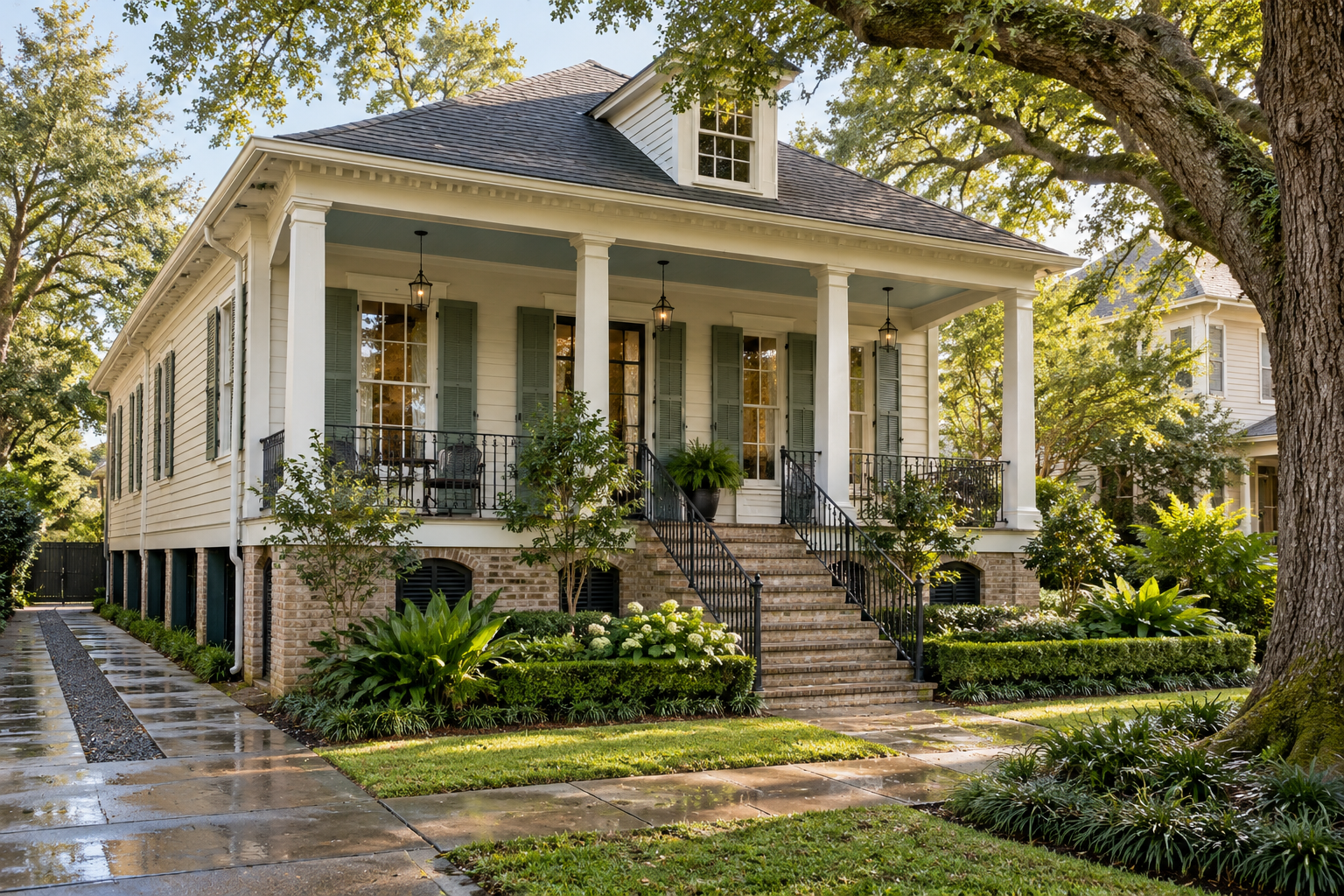
The New Orleans “Insurance-Ready” Home: The Feature Buyers Cannot See in Listing Photos
A renovated kitchen can attract attention. Original hardwood floors can create an emotional connection. A courtyard, balcony, or front porch can make a buyer imagine living in the home.
But in today’s New Orleans real estate market, one of the most valuable features may be something buyers cannot see in listing photos:
The home’s insurability.
Insurance costs and underwriting requirements can influence affordability, financing, negotiations, and whether a transaction reaches closing. Buyers should understand what affects home insurance costs in New Orleans before deciding whether a property truly fits their monthly budget.
That is why buyers are increasingly interested in homes that are not merely move-in ready, but “insurance ready.”
What Is an Insurance-Ready Home?
“Insurance ready” is not an official insurance designation, and it does not guarantee that a particular company will issue coverage. Every insurer has its own underwriting standards, and eligibility can depend on the property, applicant, coverage requested, and current market conditions.
In practical terms, an insurance-ready home is one that has been maintained and documented in a way that makes it easier for a prospective buyer to obtain accurate insurance quotes.
Important factors may include:
- The age and condition of the roof
- The type and condition of the electrical system
- Plumbing materials and visible plumbing issues
- Heating and air-conditioning systems
- Evidence of leaks, moisture, or unrepaired damage
- The home’s construction and renovation history
- Wind-mitigation features
- Flood exposure and elevation information
- Prior insurance claims
- Permits, invoices, warranties, and inspection records
A beautiful home can still create insurance complications. Conversely, a home without the newest finishes may become more attractive when its major systems have been maintained and clearly documented.
Why Insurance Readiness Matters in New Orleans
New Orleans has an unusually diverse housing stock. Buyers may encounter century-old homes, renovated shotgun houses, raised-basement properties, newer construction, converted warehouses, small condominium associations, and large residential towers.
Each property presents a different insurance profile.
Historic homes can contain a mixture of original materials and improvements made over several decades. One portion of a house may have modern wiring while another has older components. A renovated interior does not necessarily reveal the age of the roof, condition of the plumbing, or quality of work behind the walls.
As explained in our guide to what affects home value in New Orleans, condition, improvements, flood exposure, insurance expenses, and micro-location can all affect how buyers evaluate a property.
The Roof Is Often the First Major Question
Roof age and condition frequently become important during the insurance process.
A seller should not rely on a statement such as “the roof is fairly new.” Buyers and insurance professionals may need more specific information:
- When was the roof installed?
- Was the entire roof replaced or only repaired?
- Which contractor performed the work?
- Were permits required and obtained?
- Is there an invoice or transferable warranty?
- What type of roof covering was installed?
- Has the roof experienced damage or subsequent repairs?
- Does the property have a FORTIFIED designation?
Documentation can make these questions easier to answer.
Louisiana also has programs designed to encourage stronger roofing. The Louisiana Fortify Homes Program provides grants of up to $10,000 for eligible homeowners to upgrade roofs to the FORTIFIED Roof standard established by the Insurance Institute for Business & Home Safety.
The Louisiana Department of Insurance has also established premium-discount benchmarks for qualifying FORTIFIED designations. Actual pricing and eligibility can still vary, so homeowners and buyers should confirm potential savings directly with a licensed insurance professional.
Electrical and Plumbing Systems Matter Too
New Orleans homes are often renovated in stages. A new kitchen or bathroom does not necessarily mean the entire electrical or plumbing system was replaced.
Insurance companies may ask about:
- Electrical-panel type
- Wiring materials
- The approximate date of electrical updates
- Plumbing-supply and drain materials
- The age of the water heater
- Prior leaks or water damage
- Whether repairs were professionally completed
- Whether documentation or permits are available
Sellers should avoid making assumptions about systems they have not inspected. If the age or material is unknown, it is better to gather accurate information than to provide an answer that may later prove incorrect.
Buyers should also remember that a standard home inspection and an insurance evaluation serve different purposes. An inspection may identify visible defects and recommend additional evaluation, while an insurer determines whether the property meets that company’s underwriting requirements.
Buyers using government-backed financing should also understand what they can buy with FHA financing in New Orleans, because visible property defects can create appraisal or repair requirements in addition to insurance concerns.
Flood Insurance Is a Separate Conversation
Homeowners insurance and flood insurance are not interchangeable.
Most homeowners policies do not cover damage caused by flooding. A buyer may need or choose to obtain a separate flood policy depending on the property, lender requirements, flood exposure, and personal risk tolerance.
Useful flood-related documents may include:
- The property’s current flood-zone information
- An elevation certificate, when available
- Existing flood-policy information
- Records of prior flood claims
- Documentation of elevation or mitigation work
- Information about enclosures below elevated living areas
A property located outside a designated high-risk flood area is not automatically free from flood risk. Buyers should obtain property-specific information and speak with appropriate insurance and flood-risk professionals before making a final decision.
What Sellers Can Do Before Listing
A seller does not need to become an insurance expert. However, preparing the right information before listing can reduce uncertainty and prevent avoidable delays.
Create a Property-Documentation File
Collect available invoices, permits, warranties, inspection reports, elevation certificates, and records of major improvements.
Organize the information by category:
- Roof
- Electrical
- Plumbing
- HVAC
- Foundation or structural work
- Windows and exterior improvements
- Flood or storm mitigation
- Renovations and additions
Verify the Age of Major Systems
Avoid estimating when records are available. A receipt, permit, warranty, or contractor invoice can be more useful than an approximate date.
Address Active Problems
Active leaks, damaged roof components, exposed wiring, visible moisture, broken windows, and other obvious maintenance issues can raise concerns during inspections and insurance evaluations.
Not every improvement delivers the same return, so sellers should concentrate on pre-listing repairs that pay off instead of automatically completing a major renovation.
Discuss the Home With an Insurance Professional
Before marketing a property as easy to insure, sellers should consult a licensed insurance agent familiar with New Orleans properties. An insurance professional may identify information buyers will likely need and potential issues worth investigating.
Make Records Available Early
Buyers often request insurance quotes shortly after going under contract. Having organized information available can help them obtain a more meaningful quote within the inspection and due-diligence period.
What Buyers Should Do Before Making an Offer
Insurance should not be treated as a last-minute closing item.
Before committing to a property, buyers should consider asking:
- How old is the roof, and is documentation available?
- Have the electrical and plumbing systems been updated?
- Are permits available for major renovations?
- Has the property experienced previous insurance or flood claims?
- Is an elevation certificate available?
- Are there signs of moisture, leaks, or unrepaired storm damage?
- Can an insurance agent provide a preliminary quote?
- Does the quote include the coverage and deductibles the buyer needs?
- Will separate flood insurance be required or advisable?
- Are there exclusions or unusually high wind or named-storm deductibles?
The lowest premium is not automatically the best policy. Buyers should compare coverage limits, exclusions, deductibles, replacement-cost provisions, and other relevant policy details with guidance from a qualified professional.
Insurance Readiness Can Affect Negotiations
An insurance issue does not always mean a buyer should walk away. It may become part of the negotiation.
Depending on the property and contract, potential solutions could include:
- Completing a repair before closing
- Negotiating a repair credit
- Adjusting the purchase price
- Providing additional documentation
- Extending a due-diligence deadline
- Obtaining quotes from additional insurers
- Changing coverage or deductible options
- Exploring eligible mitigation improvements
The appropriate solution depends on the cost, timing, financing requirements, contract terms, and buyer’s comfort with the risk.
Before assuming a price reduction represents a bargain, buyers should understand why some New Orleans homes are sitting on the market longer. A lower price can create an opportunity, but it does not automatically resolve insurance or property-condition concerns.
Condos Require a Building-Level Review
For condo buyers, an attractive and updated unit is only part of the purchase.
The condominium association’s master insurance policy, deductibles, reserves, maintenance history, pending claims, and responsibility for different building components can all matter. Buyers should determine what the association covers and what must be covered through an individual unit-owner policy.
A financially healthy, well-maintained building may provide more confidence than a beautifully renovated unit in an association facing major repairs or insufficient reserves.
Buyers should use our guide to evaluating New Orleans condo associations to review financial, insurance, maintenance, and governance considerations before committing to a unit.
Insurance Ready Is the New Move-In Ready
Move-in-ready once referred primarily to appearance. Buyers wanted fresh paint, an updated kitchen, clean bathrooms, and attractive flooring.
Those features still matter—but New Orleans buyers are looking deeper.
A truly prepared home offers more than polished listing photos. It gives buyers clear information about the roof, systems, renovation history, flood exposure, and property condition. That information does not guarantee insurance coverage, but it can reduce uncertainty and help buyers make better-informed decisions.
For sellers, becoming insurance ready means addressing important maintenance issues and organizing the property’s history before listing. For buyers, it means investigating insurance early enough for the results to influence the offer and due diligence.
In the New Orleans market, confidence is valuable. A home that combines local character, responsible maintenance, and reliable documentation may have a meaningful advantage over one that simply looks renovated.
Frequently Asked Questions About Insurance-Ready Homes
What does “insurance ready” mean in real estate?
Insurance ready is an informal term for a property that appears well-maintained and has documentation that may help a buyer obtain an accurate insurance quote. It is not an official designation or guarantee of coverage.
Can a seller guarantee that a New Orleans home is insurable?
No. Insurance eligibility and pricing depend on the insurer’s underwriting requirements, the property, the applicant, and the coverage requested. Buyers should obtain their own quotes.
Does a new roof guarantee lower homeowners insurance?
No. A newer roof may help, but premiums depend on numerous factors. A properly documented FORTIFIED designation may qualify for certain discounts, although eligibility and actual savings should be confirmed with an insurer.
Does homeowners insurance cover flooding?
Most standard homeowners policies do not cover flood damage. Buyers may need or choose to purchase a separate flood insurance policy.
When should a buyer obtain an insurance quote?
Ideally, buyers should begin gathering insurance information before making an offer and obtain property-specific quotes as early as possible during the contract period.
What documents should sellers provide?
Helpful records may include roof invoices, permits, warranties, elevation certificates, renovation records, inspection reports, mitigation documentation, and information about prior claims when legally appropriate.
Why does condo master insurance matter?
The association’s master policy can affect building coverage, deductibles, lender approval, association expenses, and the coverage an individual owner needs. Buyers should review it with their lender and insurance professional.
Can insurance problems affect mortgage approval?
Yes. Lenders generally require acceptable property insurance before closing. If adequate coverage cannot be obtained or the premium materially changes the buyer’s qualifying payment, financing may be affected.
Thinking About Buying or Selling in New Orleans?
Insurance is only one part of evaluating a property, but it can have a major effect on affordability and the success of a transaction. Raymond Real Estate helps New Orleans buyers and sellers examine the details that may not be obvious in listing photos.
Contact Raymond Real Estate for property-specific guidance and a more informed approach to your next move.
This article is for general informational purposes and is not insurance, legal, financial, construction, or flood-risk advice. Coverage, underwriting standards, premiums, discounts, and lender requirements vary. Consult licensed professionals about a specific property.
Check out this article next