

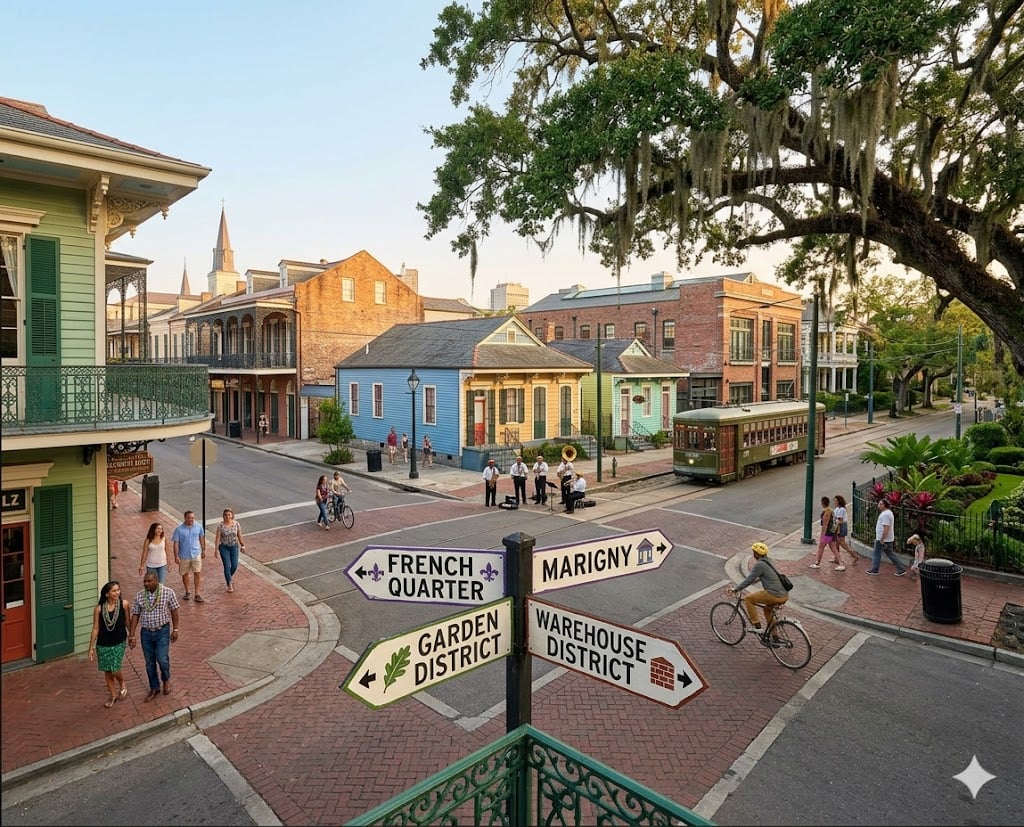
A quick stroll to coffee, dinner, groceries, and the streetcar changes how a city feels - and in New Orleans, it can change how a home lives day to day. The best walkable New Orleans neighborhoods offer more than charm. They shape your routine, your commute, and even the kind of property that makes sense for your lifestyle.
For buyers, walkability is rarely just about steps on a map. It usually sits alongside questions about parking, noise, flood risk, architecture, price point, and whether a neighborhood still feels practical after the novelty wears off. In New Orleans, those trade-offs matter because one highly walkable block can feel very different from the next.
What makes a neighborhood truly walkable in New Orleans?
In this market, walkability means being able to handle daily life with less dependence on a car, not necessarily giving one up entirely. A neighborhood feels genuinely walkable when you can reach restaurants, casual essentials, green space, and local gathering spots without much planning. The best areas also have a street layout and rhythm that make walking feel pleasant, not forced.
That said, New Orleans walkability has its own version of reality. Sidewalk conditions vary. Summer heat is real. Some of the most charming residential streets are quiet by design, which can mean a longer walk for basics. And neighborhoods that are ideal for walking may ask you to compromise on lot size, private parking, or price.
Best walkable New Orleans neighborhoods for buyers
French Quarter
If your idea of walkability means stepping outside into one of the most active urban environments in the country, the French Quarter is hard to top. Restaurants, cafes, galleries, music venues, and daily conveniences are packed into a compact footprint. For condo buyers or those seeking a lock-and-leave second home, it offers a rare level of immediate access.
The trade-off is just as obvious. Activity levels are high, privacy can be limited, and parking is often a challenge. Buyers drawn to the Quarter usually succeed when they want atmosphere and architecture more than quiet predictability. It tends to work best for those who value proximity and energy over extra space. Explore the French Quarter
Warehouse District
The Warehouse District delivers a more polished urban feel, with strong walkability and a slightly more structured residential experience than the French Quarter. You can walk to restaurants, museums, offices, entertainment, and the riverfront, and many buildings are well-suited to buyers looking for luxury condominiums or full-service living.
This is one of the most appealing options for professionals who want city access without giving up a more refined residential standard. Prices can reflect that appeal, and the housing mix leans heavily toward condos and converted buildings rather than classic single-family homes. If your priority is elegant city living with real pedestrian convenience, it stands out. Explore the Warehouse District
Garden District
The Garden District is one of the city's most visually iconic neighborhoods, but it is also one of the more nuanced choices for walkability. Along Magazine Street and portions near St. Charles Avenue, daily life can feel very connected. Shops, restaurants, cafes, and the streetcar create a strong foundation for getting around on foot.
Move deeper into the neighborhood, though, and the experience becomes more residential and less immediately convenient. That is not a flaw - for many buyers, it is the point. You get beautiful homes, mature trees, and a quieter setting, but your version of walkability may be more leisurely than practical. Buyers looking here often want prestige, architecture, and a graceful pace first, with walkability as an added benefit. Explore the Garden District
Uptown
Uptown covers a broad area, so walkability depends heavily on the specific pocket. Homes near Magazine Street, Freret Street, or St. Charles Avenue generally offer the strongest day-to-day convenience. Restaurants, local shopping, schools, and the streetcar all contribute to a neighborhood that can support both residential comfort and regular foot traffic.
This area tends to appeal to buyers who want a long-term primary residence rather than a purely urban lifestyle. You may find more space and a more traditional neighborhood feel than downtown, but not every block will be equally walkable. In Uptown, micro-location matters as much as the neighborhood name. Explore Uptown
Lower Garden District
For many buyers, the Lower Garden District hits a sweet spot. It offers attractive architecture, access to Magazine Street, proximity to downtown, and a walkable pattern that feels active without being overwhelming. You can often enjoy a blend of historic homes, condos, and smaller-scale residences in a setting that feels connected to multiple parts of the city.
This flexibility is part of its appeal. The neighborhood works for buyers who want charm and convenience, but do not necessarily want the nonstop intensity of the French Quarter or a pure condo environment. Depending on the block, you may also find a better balance between residential calm and urban access. Explore the Garden District
Marigny
The Marigny has long attracted buyers who want character, culture, and genuine street-level energy. Walkability is one of its strongest assets, especially for those who enjoy neighborhood bars, music, coffee shops, and easy access to the French Quarter. Architecturally, it offers some of the personality buyers come to New Orleans hoping to find.
It is not the right fit for everyone. Noise tolerance matters, and block-by-block differences can be meaningful. Buyers considering the Marigny usually do best when they spend time there at different hours, because daytime charm and nighttime activity can feel like two different experiences. Explore the Marigny
Bywater
Bywater remains one of the city's more distinctive walkable neighborhoods, with a creative identity and a compact feel that supports local routines on foot. Coffee shops, restaurants, parks, and neighborhood gathering places are part of the appeal, and the architecture often draws buyers looking for something less conventional than a typical move-in-ready suburban alternative.
Still, lifestyle fit is everything here. Housing stock can be eclectic, and buyer expectations around renovation, finish level, and block character should be realistic. For some, that mix is exactly the value. For others, it can feel less predictable than neighborhoods with more uniform housing and pricing. Explore the Bywater
Mid-City
Mid-City deserves serious attention from buyers who want walkability with a broader mix of housing types and a more everyday residential feel. Areas near the Canal streetcar line, Bayou St. John, and neighborhood commercial corridors can offer an excellent blend of convenience and livability. Restaurants, green space, and transit access all help support a less car-dependent lifestyle.
Compared with some of the more tourism-adjacent neighborhoods, Mid-City often feels more grounded in daily local life. That makes it especially attractive for primary residence buyers. It also gives you more variation in property style and price point, though, as always in New Orleans, one section can differ noticeably from another. Explore Mid City
How to choose the right walkable neighborhood for your lifestyle
The best walkable New Orleans neighborhoods are not automatically the best neighborhoods for you. A buyer who wants to walk to dinner and galleries three nights a week may prioritize the Warehouse District or French Quarter. A buyer who wants tree-lined streets, architectural significance, and access to shopping may lean toward the Garden District or parts of Uptown.
It also helps to define what you mean by walkable before you start touring. Some buyers mean entertainment and restaurants. Others mean groceries, pharmacy access, and transit. Others want the ability to walk a dog comfortably, meet neighbors, and enjoy a street that feels active but not crowded. Those are all different goals, and they do not always point to the same neighborhood.
Parking is another factor buyers sometimes underestimate. In highly walkable areas, dedicated parking can be limited or expensive, yet still important if you commute or travel often. Likewise, if you want historic architecture, you may need to balance that preference with renovation needs, insurance considerations, and lot constraints.
A smart way to evaluate walkability before you buy
Online research is a starting point, but it is not enough. The most reliable way to evaluate walkability is to experience the neighborhood the way you would actually live in it. Walk to coffee in the morning. Check how far the nearest grocery option really feels in summer heat. Visit at night. Notice lighting, traffic, noise, and whether the area feels comfortable at the pace you prefer.
This is where local guidance matters. A neighborhood can look ideal on paper and feel wrong in person, or vice versa. Buyers who work with a brokerage deeply familiar with New Orleans, such as Raymond Real Estate, often make better decisions because the conversation goes beyond broad reputation and into block-level fit.
A walkable neighborhood should make daily life easier, not just more picturesque. The right one gives you convenience, confidence, and a sense that your home is connected to the city in a way that fits how you actually want to live. That is the version of walkability worth buying for.
Check out this article next