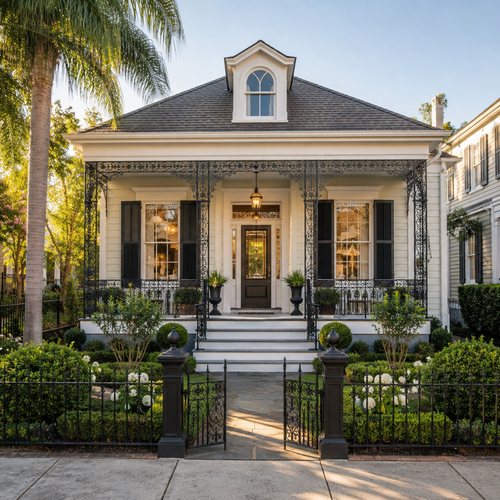


A beautifully restored New Orleans home can have original millwork, a newly finished kitchen, and a history that deserves just as much attention below the surface. Are flood claims disclosed when you buy a home? Often, yes, but a thoughtful buyer should never rely on one answer alone. In a city shaped by water, understanding a property's flood history is part of making a confident, well-informed decision.
Are Flood Claims Disclosed in Louisiana?
Louisiana sellers are generally required to complete a property disclosure document that addresses known conditions affecting the home. Flooding is a meaningful part of that conversation. The disclosure process is designed to give buyers information the seller actually knows about, including past flooding, water intrusion, flood-related repairs, and other conditions that could materially affect the property.
That distinction matters: a disclosure is not a warranty that a home has never flooded. It is a statement of the seller's knowledge. A seller who purchased recently, inherited the property, or never made an insurance claim may have limited historical information. Likewise, a home may have experienced water intrusion that did not result in an insurance claim, or a claim may have been filed for a relatively contained event that was repaired properly.
For New Orleans buyers, the best question is not simply whether the home has flooded. Ask what happened, when it happened, how high the water reached, what caused it, what was repaired, and whether the issue has recurred. A seller's answer can reveal far more than a checkbox.
Louisiana disclosure requirements can change, and the details of a particular transaction matter. Your real estate professional can help you review the disclosure carefully, while an attorney can advise on legal obligations or concerns specific to the property.
What a Flood Claim Does and Does Not Tell You
A prior flood claim is a useful fact, but it is not a verdict on the home. It may reflect a major regional event, a drainage issue that has since been corrected, a localized plumbing-related loss, or a modest payment for cleanup and repairs. The number and timing of claims, the source of water, and the scope of repairs all shape the real story.
Just as importantly, no prior claim does not necessarily mean no prior flooding. An owner may have paid out of pocket, chosen not to file a claim, had coverage that excluded the event, or simply never known about an incident from an earlier owner.
Flood insurance claims and homeowners insurance claims are also different. Standard homeowners insurance policies typically do not cover flood damage from rising water or storm surge. Flood coverage may be provided through the National Flood Insurance Program or a private insurer, and each record may tell only part of the picture.
A property can also be in a preferred flood zone and still flood during an unusual rainfall event. Conversely, a home in a higher-risk zone may have a strong elevation, effective mitigation features, and no known interior flooding. Flood-zone designation is an essential data point, not a complete risk assessment.
How to Investigate a Home's Flood History
The strongest due diligence combines the seller's disclosure with documents, inspection findings, and neighborhood-level context. Start early, ideally before making an offer or while writing contingencies that give you appropriate time to investigate.
Read the disclosure for details, not just answers
Review every flood- and water-related response on the seller's property disclosure document. If the seller indicates past flooding, repairs, drainage problems, or water intrusion, ask for supporting details in writing. Request dates, descriptions of the event, photographs if available, invoices, permits, and information about the contractor who completed the work.
Pay attention to language that is vague. Terms such as minor water, occasional puddling, or resolved issue are invitations for a more specific follow-up. Was the water limited to a yard, garage, crawlspace, or lower level? Did it enter the living area? Did it occur during a named storm, a heavy rain, or under ordinary conditions? Precision helps your inspection team focus on the right questions.
Request available insurance and repair records
Ask the seller for available flood insurance declarations, claim summaries, proof of repairs, and any elevation certificate in their possession. An elevation certificate can be especially helpful for understanding how the building's elevation compares with expected flood levels, though not every home will have a current one.
If records indicate a claim, determine whether the work addressed the underlying cause as well as the damage itself. Replacing drywall and flooring is different from improving drainage, raising mechanical equipment, repairing a roof penetration, or installing flood vents where appropriate. Quality documentation and properly permitted work can provide reassurance. A lack of records does not automatically end a transaction, but it should affect the questions you ask and the professional advice you seek.
Use an inspector who understands local construction
A general home inspection is valuable, but New Orleans properties often benefit from an inspector experienced with raised foundations, historic construction, drainage patterns, and the signs of prior water intrusion. They may identify staining, altered framing, mold-like growth, deteriorated materials, uneven grading, or systems installed below a likely water line.
An inspector cannot guarantee that a house will never flood. No professional can make that promise. What they can do is assess visible conditions, identify areas that warrant further evaluation, and help you understand the maintenance and mitigation priorities that may come with the home.
Study the block, not only the house
One home's history is only part of the analysis. In New Orleans, conditions can vary dramatically from one block to the next. Ask about street flooding, nearby drainage improvements, pump and canal conditions, neighbors' experiences, and how the property performed during significant rain events.
When you visit, look at the property's relationship to the street, surrounding lots, and drainage paths. Notice whether the yard slopes toward the house, whether downspouts discharge near the foundation, and whether exterior mechanical equipment is elevated. These observations do not replace expert review, but they can make your conversations with the seller and inspector much more productive.
Make Flood Due Diligence Part of Your Offer Strategy
A buyer should have enough time in the purchase agreement to review disclosures, complete inspections, investigate insurance availability, and consider repair estimates if needed. This is not about approaching every older home with suspicion. It is about preserving the ability to make a clear decision before contingencies expire.
Insurance deserves early attention. Obtain a flood insurance quote based on the specific property, not a general estimate for the neighborhood. Premiums can depend on the home's characteristics, elevation, coverage amount, deductible, insurer, and prior policy status. If the seller has an existing policy, ask whether it can be assigned at closing and whether that option is advantageous for your situation. Your insurance professional can explain the choices and any timing requirements.
When a flood history is disclosed, the right response depends on the facts. A well-documented, fully repaired event may be manageable and appropriately reflected in the home's price and insurance costs. Repeated interior flooding, incomplete repairs, uncertain documentation, or a concerning inspection result may justify additional investigation, negotiation, or a decision to move on. The goal is not to find a perfect property. It is to understand the property you are buying and price its risks accordingly.
A Clearer Path to a Confident Purchase
Flood questions should be handled with the same care as financing, title, and inspection. The right home is not defined by a single disclosure response. It is defined by a complete picture of its condition, its setting, its insurance outlook, and your comfort with the responsibilities of ownership.
For buyers considering a New Orleans home, Raymond Real Estate brings local perspective to the questions that matter before closing. A measured review now can protect both your investment and the enjoyment of the home long after move-in day.Learn More
Are flood claims disclosed when you buy a home?
In Louisiana, buyers generally receive a Property Disclosure Document that addresses known flood history and other flood-related information. However, buyers should not assume the seller’s disclosure represents a complete insurance-claims history. Louisiana REALTORS® recommends that buyers specifically ask about previous flooding and request a flood-loss history from the seller.
Does a seller have to disclose that a home previously flooded?
Louisiana’s disclosure process requires sellers to provide information about the property to the best of their knowledge, including known conditions that could materially affect the property. Flood history is particularly important in the New Orleans area and should be carefully reviewed before purchasing.
Can I find out how many flood claims have been filed on a property?
Yes, but obtaining the complete history may require cooperation from the current owner. According to Louisiana REALTORS®, FEMA treats an individual property’s NFIP flood-loss history as protected information, so the property owner generally must request it. A buyer can ask the seller to obtain and provide that history.
Is flood history the same as flood-claim history?
No. A property could have experienced flooding without an insurance claim being filed, and an insurance claim may contain information that is not fully detailed on a standard property disclosure. Buyers should investigate both the physical flood history of the home and any available insurance-loss history.
What is a CLUE report, and can it show previous insurance claims?
A C.L.U.E. report is an insurance-claims report maintained by LexisNexis. It can contain up to seven years of homeowners and personal-property insurance claims and is used by insurers when evaluating risk and pricing coverage.
Should I ask for flood information even if the home is in Flood Zone X?
Yes. Flood zones measure flood risk; they do not guarantee that a property has never flooded. Buyers in New Orleans and surrounding communities should ask about prior flooding, drainage problems, flood claims, elevation information and the cost of flood insurance regardless of the property's designated flood zone.
What flood-related documents should I request before buying?
Buyers should consider requesting the seller’s flood-loss history, current or previous flood insurance information, an Elevation Certificate if available, and documentation relating to FEMA assistance, mitigation grants or other federal disaster programs. Louisiana REALTORS® specifically recommends reviewing the disclosure, requesting an Elevation Certificate and asking the seller for flood-loss history.
Can previous FEMA assistance affect a new owner?
Potentially. Certain properties that received federal disaster assistance may carry an “Obtain and Maintain” flood-insurance requirement that can continue when ownership changes. Sellers are responsible for notifying buyers when such a requirement applies.
Can previous flood claims affect the cost of insurance?
They can. Insurance companies use claims and loss-history information when evaluating eligibility and premiums. For this reason, buyers should obtain homeowners and flood-insurance quotes before the inspection and financing periods expire, rather than waiting until just before closing.
What is the best way to protect yourself when buying a home with possible flood history?
Do not rely on one source. Review the seller’s Property Disclosure Document, investigate the flood zone and elevation, request available flood-loss records, obtain insurance quotes, and ask questions about when flooding occurred, how much water entered the property and what repairs were completed. For New Orleans buyers, understanding the property’s actual flood history can be just as important as knowing the flood-zone designation.
Check out this article next