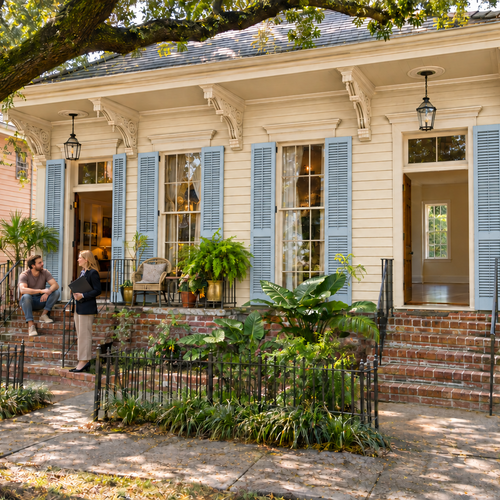

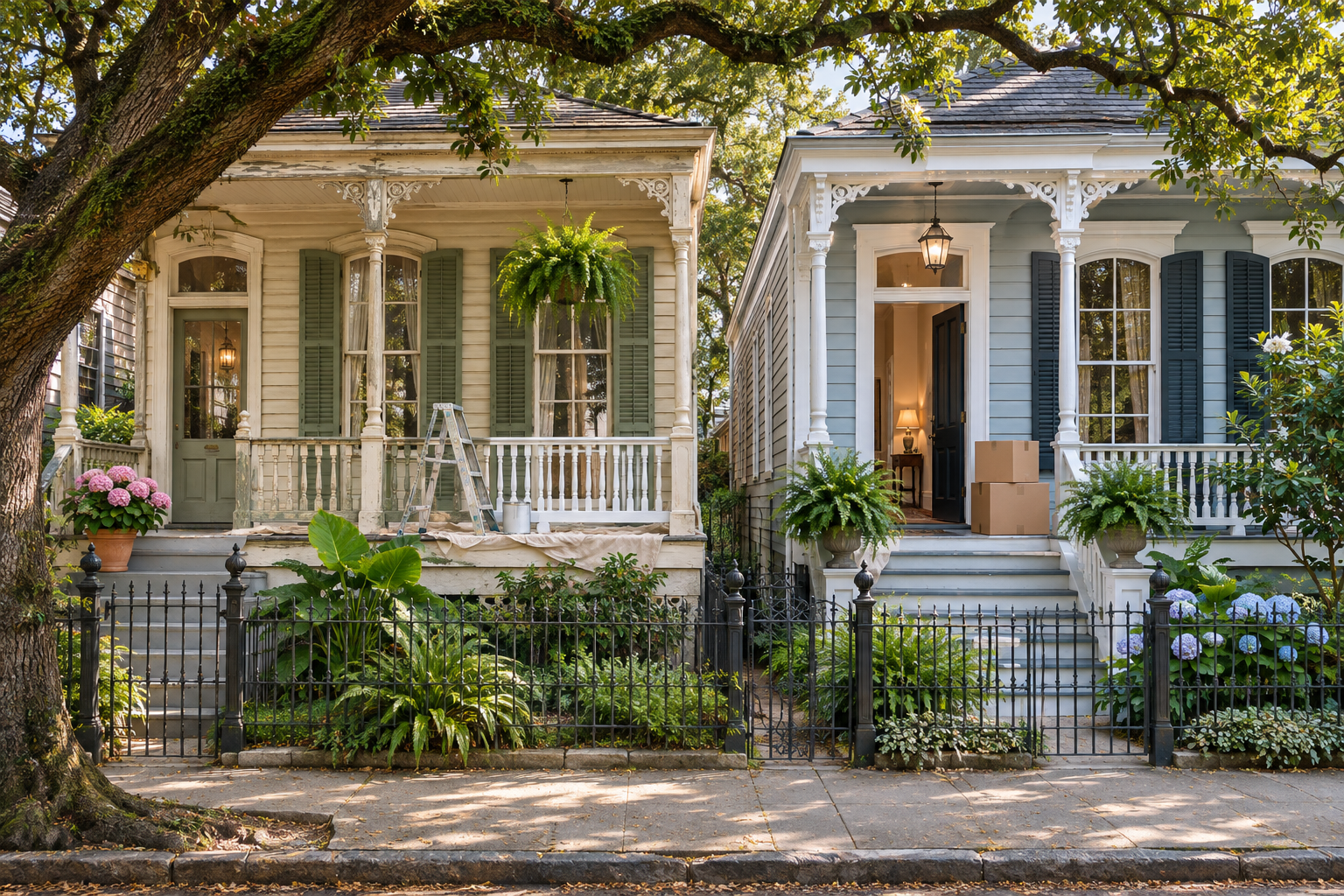
You love your block. You know the neighbors, have a favorite coffee stop, and can picture another Sunday on the front porch. Inside the house, though, daily life has become a series of compromises: a kitchen that feels crowded, too little storage, an awkward bedroom arrangement, or more maintenance than you want.
Should you renovate your New Orleans home or sell it and move?
The answer starts with what you need the property to do. A renovation may let you stay in a location you love and improve how the house functions. Moving may give you features the current property cannot realistically provide.
Before choosing either path, compare the proposed finished home, the complete costs, and how you want to live over the next several years.
Start With the Problem You Want to Solve
Write down the three things that most often frustrate you about your home. Be specific. “We need more space” could mean a private office, a bathroom guests can reach without walking through a bedroom, or simply better storage.
Those problems call for different solutions. Reworking an existing room may accomplish more than an addition. A kitchen update may improve daily life without changing the floor plan. A designer may identify options you have not considered.
Other priorities depend on the property itself. A renovation cannot change your commute or create a larger lot. Adding parking, eliminating stairs, or expanding a building may be difficult or impractical for a particular address.
Also consider whether you actually want more house. Our article on trading square footage for a better New Orleans lifestyle explores why a smaller home in the right setting may be a better fit.
Compare Three Realistic Versions of Your Next Chapter
A useful decision includes three possibilities: stay with modest improvements, complete the larger renovation, or move to a property that already meets your needs.
The middle option can receive most of the attention because it is exciting to imagine a transformed home. Give the smaller project a fair look, too. Better lighting, storage, a revised furniture layout, or a targeted update might resolve enough of the problem to make staying comfortable.
Then test the moving option against actual available properties. Identify homes you would seriously consider, visit them, and price the ownership costs. A real alternative is more useful than comparing a detailed construction estimate with an imagined perfect house.
Build a Renovation Budget That Includes the Entire Project
Start with a written scope and comparable contractor estimates. Find out what each proposal includes, what it excludes, and which allowances still depend on your selections.
Your budget should account for:
- Planning and approvals: Design, engineering when needed, permits, and inspections.
- Construction: Demolition, labor, materials, finishes, and required system changes.
- Existing conditions: Repairs identified in the roof, foundation, plumbing, electrical system, or other affected areas.
- Disruption: Temporary housing, storage, extra meals out, and time away from work when applicable.
- Financing and insurance: Borrowing costs and any coverage changes needed during construction.
- A contingency: A reserve suited to the scope, building condition, and unresolved questions.
An attractive finish allowance will not cover every issue uncovered during demolition. Ask your project team which uncertainties can be investigated before signing and which must remain in the budget.
Keep existing ownership expenses separate from additional project costs so you can compare the alternatives without counting the same expense twice.
Price the Move Beyond the Purchase Price
Moving has its own costs. Estimate your current home’s likely sale proceeds after the mortgage payoff and anticipated selling expenses, including any agreed concessions or repairs. Your asking price and the cash available for your next purchase are different figures.
For the next property, review the down payment, loan costs, closing expenses, moving costs, and immediate improvements. Then compare the complete ongoing budget: mortgage payment, property taxes, homeowners insurance, flood insurance where applicable, association dues, maintenance, and utilities.
Obtain property-specific estimates. A similarly priced home can produce a different monthly budget. Our guide to an insurance-ready New Orleans home explains the property records and questions worth bringing into that review.
Include any period when you might carry both properties, along with a reserve for delays.
Give Your Current Mortgage Rate Its Proper Weight
If your existing mortgage has a favorable rate, keeping it may make staying attractive. The renovation still needs its own financing plan.
A home equity loan or line of credit adds a payment rather than making the project cost disappear. The Consumer Financial Protection Bureau explains that HELOCs usually have variable interest rates, and payments can increase when the repayment period begins. Consumer Financial Protection Bureau
Ask your lender to compare the existing mortgage plus renovation borrowing with the financing for a replacement home. Review fees, repayment terms, cash reserves, and the effect of a project overrun.
A favorable mortgage is one part of the decision. Consider it alongside the finished home’s usefulness and the household budget.
Confirm What Your New Orleans Property Can Accommodate
Before budgeting around an addition, opened wall, new entrance, or converted space, have the appropriate professionals assess the plan. Check structural feasibility, zoning, setbacks, building systems, and permits for the actual scope.
Historic review depends on the address and proposed work. Confirm whether your property falls under HDLC or Vieux Carré Commission jurisdiction and which approvals apply. The VCC’s review includes exterior work hidden from the street and certain interior projects affecting structure or the exterior. City of New Orleans
Our historic district rules guide for New Orleans homes offers additional background. Verify the requirements for your address before ordering materials or committing to a design.
For a major renovation, also ask City staff whether floodplain or substantial-improvement requirements affect the project. FEMA explains that qualifying projects can require compliance with local floodplain regulations. Obtain a determination for your property rather than assuming a cosmetic description settles the issue. fema.gov
Condo owners should review association documents and approval procedures before planning changes to walls, flooring, windows, plumbing, or shared systems. Our guide to what you can change when renovating a New Orleans condo explains those questions.
Separate Resale Value From the Value of Enjoying Your Home
A project can make your home much more enjoyable without increasing its resale value by the full amount spent. That may be an acceptable choice if you plan to stay and can comfortably afford it.
Ask for an assessment of the property in its current condition and an informed estimate of how the proposed finished home would compare with recent sales. An estimate of future value is not a guaranteed sale price.
Look at layout, condition, parking, outdoor space, and location alongside square footage. Expensive finishes alone may not put your property in the same category as a larger or better-positioned home.
If you own a double, the comparison also needs to include any rental income you would give up by combining the units. Our article on converting a New Orleans double into a single-family home examines that specific decision.
Which Option Fits Your Priorities?
| Consideration | Renovating may fit when… | Moving may fit when… |
|---|---|---|
| Location | You want to remain on your current block. | Your daily life would work better elsewhere. |
| Layout | A feasible redesign solves your main frustrations. | The property cannot reasonably provide the features you need. |
| Budget | The complete project and reserves are affordable. | A suitable replacement offers a more comfortable total budget. |
| Timing | You can accommodate construction and possible delays. | You need usable space sooner and can coordinate a purchase. |
| Long-term plans | You expect to enjoy the improvements for several years. | Your needs are changing beyond what this property can support. |
If You Move, Decide Which Improvements to Make First
You do not need to complete your dream renovation before offering the home for sale.
Compare expected net proceeds from selling in its current condition, making selective repairs, and completing a larger project. Include the work, financing, time, and uncertainty in each scenario.
Our guide to pre-listing repairs that pay off can help you frame that discussion. Ask which concerns are likely to affect your particular buyer pool before spending on a major remodel.
Then coordinate the sale and purchase. Explore how to buy before selling your home if you want to secure the next property first. Compare that approach with selling first based on your financing, available equity, and ability to handle an overlap.
Get the Numbers Before You Commit
You can investigate both paths before choosing one. A renovation scope, contractor estimates, lender review, current home valuation, and a look at suitable replacement properties will give you a much clearer comparison.
At Raymond Real Estate, we help New Orleans homeowners evaluate their current property and explore what a move could offer. We can help you compare the real estate options while you confirm construction feasibility, financing, and approvals with the appropriate professionals.
Wondering whether to renovate or relocate? Start by finding out what your New Orleans home could sell for, then contact Raymond Real Estate to discuss your next move.
Frequently Asked Questions About Renovating or Moving in New Orleans
Is renovating cheaper than moving?
It depends on the project and the replacement property. Compare the complete renovation budget and financing with selling expenses, purchase costs, moving expenses, and the next home’s ongoing budget.
Will I recover all my renovation costs when I sell?
You should not assume so. Evaluate comparable sales and the proposed finished layout before treating project spending as an equal increase in market value. Consider the enjoyment you expect to receive separately.
Should I renovate if I might sell soon?
Compare a larger project with selective repairs and selling in the current condition. A short ownership horizon gives you less time to enjoy the renovation and makes project costs and delays especially relevant.
Can I stay in my house during a renovation?
Ask your contractor whether occupancy is practical and safe for the planned work. Consider access to bathrooms and cooking facilities, utilities, dust control, household needs, and the expected duration before relying on staying.
What should I do first?
Define what needs to change. Then obtain a current home valuation, preliminary renovation advice, and a realistic look at replacement homes. Those steps establish the alternatives before you commit to either path.
Check out this article next