
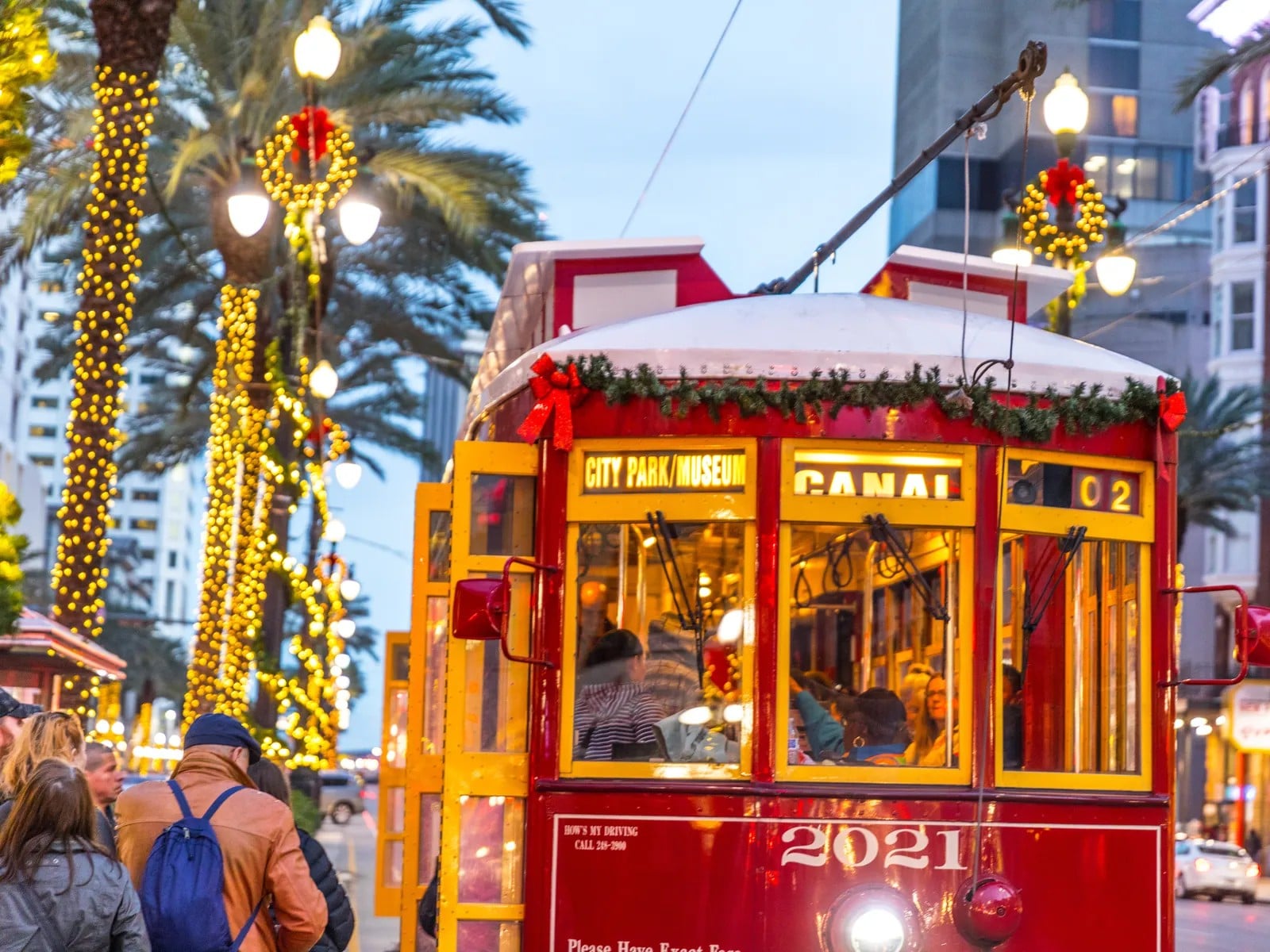
Canal Street has always been one of New Orleans' most recognizable destinations. Now, a renewed effort to revitalize this historic corridor could help shape the future of downtown living—and potentially create new opportunities for condominium buyers, homeowners, and investors.
For generations, Canal Street connected the French Quarter, Central Business District, and the Mississippi River waterfront. Its grand department stores, historic theaters, hotels, streetcars, and impressive architecture helped establish downtown New Orleans as a center of commerce and entertainment.
Over time, changing shopping habits, vacant storefronts, underused buildings, and broader economic challenges altered the corridor.
But Canal Street may be entering another chapter.
With a new city-led revitalization initiative, proposed zoning changes, infrastructure improvements, and a renewed emphasis on downtown residential development, there is growing interest in what the future could hold.
For buyers considering a French Quarter pied-à-terre, a luxury Warehouse District residence, or a condominium near Canal Street, these developments deserve attention.
The opportunity isn't simply about revitalizing one famous street. It's about what a stronger downtown could mean for the neighborhoods, residences, and businesses surrounding it.
New Orleans Launches the Canal Street Renaissance Initiative
On July 28, 2026, Mayor Helena Moreno announced the Canal Street Renaissance Initiative, a coordinated effort intended to improve the corridor's appearance, safety, infrastructure, economic activity, and long-term development potential.
The initiative brings together city departments, business leaders, property owners, and community stakeholders under a broader revitalization strategy.
According to the City of New Orleans, the initial phase focuses on improvements residents and visitors can experience directly.
These include:
Enhanced public safety coordination
Improved lighting and infrastructure
Greater attention to cleanliness and maintenance
Stronger code enforcement
Better pedestrian conditions
Engagement with existing businesses and property owners
Future phases are intended to support new retail activity, cultural programming, entertainment, and redevelopment of underused properties.
One particularly interesting objective is the activation of vacant upper floors for residential, hotel, and commercial uses.
That could become important for downtown real estate.
A historic commercial building that currently has an active ground-floor storefront but several unused upper stories might eventually become a candidate for residential conversion.
While not every building will be suitable for condominiums, the renewed focus on upper-floor occupancy raises an interesting possibility: Could Canal Street become more residential over the next decade?
Proposed Zoning Changes Could Encourage New Downtown Development
Another development occurred on October 15, 2026, when the New Orleans City Council adopted Motion M-26-441.
The motion directs the City Planning Commission to hold a public hearing and consider recommendations for changes to the Comprehensive Zoning Ordinance based on the city's Canal Street planning work.
The potential changes include greater flexibility for certain temporary businesses, outdoor seating, live entertainment, bicycle parking, signage, and other uses intended to encourage activity along the corridor.
The proposal also asks planners to evaluate whether existing overlay districts and certain land-use restrictions should be adjusted.
These changes have not yet been adopted as a new set of zoning permissions. The motion begins a review and recommendation process.
Still, the direction is noteworthy.
Traditional downtown corridors increasingly need more than office towers, hotels, and storefronts to sustain activity throughout the day.
A healthier mix of businesses, entertainment, residences, and pedestrian-friendly spaces can create a neighborhood that attracts people beyond normal business hours.
For prospective condo buyers, the most interesting question may be how successfully Canal Street evolves into a place where more people want to live—not simply visit.
Could Vacant Commercial Buildings Become New Condos?
One of Canal Street's most interesting real estate characteristics is its collection of historic commercial buildings.
Many offer architectural features that would be difficult to reproduce in modern construction, including elaborate facades, large windows, high ceilings, and prominent downtown locations.
Adaptive reuse—the process of converting an existing building to a new purpose—has already played an important role in New Orleans' residential development.
The Warehouse District provides a familiar example.
Former warehouses and industrial buildings have been transformed into lofts, condominiums, and residences that combine historic character with modern convenience.
Canal Street could present similar possibilities.
Imagine a former commercial building with renovated residential units upstairs, active retail on the ground floor, and convenient access to restaurants, theaters, and public transportation.
For the right property, that combination could appeal to full-time residents, downsizers, and second-home buyers.
However, converting a historic commercial building into condominiums is rarely simple.
Developers must consider structural conditions, elevators, fire safety, residential building codes, financing, insurance, historic preservation requirements, and the economics of construction.
Most importantly, residential conversion does not automatically mean condominium ownership. Some projects may be better suited to rental apartments, hotels, or mixed-use development.
The revitalization initiative creates an opportunity to explore these possibilities, but individual projects would still need to satisfy applicable approvals and financial requirements.
1201 Canal Street Shows How Historic Buildings Can Become Condos
One existing example of adaptive reuse is 1201 Canal Condominiums.
The property occupies the former Krauss department store, a significant part of Canal Street's retail history.
The building's conversion illustrates how a former commercial landmark can take on a new residential purpose while preserving an important piece of the city's architectural identity.
Today, the development offers an urban residential experience near the French Quarter, theaters, streetcar connections, and major downtown employment centers.
It also demonstrates that residential ownership along Canal Street isn't a new concept.
What could change is the scale of attention being directed toward bringing additional underused space back into productive use.
Buyers interested in similar urban properties can explore our Central Business District neighborhood guide for an overview of downtown condominium living.
What Canal Street Revitalization Could Mean for Existing Condo Owners
For current condo owners in the CBD, French Quarter, and Warehouse District, the long-term implications may be just as interesting as the possibility of new construction.
A more active Canal Street could influence how prospective buyers perceive downtown New Orleans.
Here are several potential benefits worth monitoring.
1. A More Attractive Downtown Lifestyle
Condominium living often appeals to buyers who value convenience and walkability.
Being able to walk to restaurants, entertainment, shops, theaters, and cultural destinations is part of the lifestyle that makes downtown New Orleans distinctive.
Improvements to sidewalks, lighting, public spaces, and the overall pedestrian experience could enhance that appeal.
2. Increased Interest in Downtown Residential Living
A stronger mix of retail, entertainment, employment, and residential activity may attract buyers who previously overlooked the CBD.
Potential buyers could include professionals, relocating homeowners, downsizers, and second-home purchasers who want an urban lifestyle without the maintenance of a traditional single-family property.
3. Renewed Interest in Historic Properties
Older commercial and residential buildings may receive greater attention as developers and buyers reconsider the possibilities for underused downtown real estate.
For condominium owners, thoughtfully executed neighboring development could improve the surrounding environment and strengthen interest in the area.
4. Potential Long-Term Property Value Support
Public improvements and nearby private investment can contribute to a property's desirability.
However, revitalization does not guarantee appreciation.
The effects on condo values will depend on market demand, financing conditions, supply, building quality, ownership expenses, and how effectively redevelopment plans become reality.
If new residential inventory increases significantly, existing condos could also face additional competition.
For a closer look at how supply affects prices and marketability, read our New Orleans Condo Inventory Trends to Watch.
The Downtown Development District Is Planning for the Next Five Years
Canal Street's revitalization is part of a broader conversation about downtown New Orleans.
In October 2026, the Downtown Development District unveiled its 2027–2031 strategic plan, identifying several priorities intended to strengthen downtown's economic and residential future.
Among those priorities are activating vacant properties, supporting downtown growth, improving the district's image, and encouraging a larger permanent residential population.
The plan specifically identifies Canal Street revitalization as an important initiative.
It also recognizes the importance of addressing vacant buildings and creating opportunities for housing and economic development.
This matters because successful revitalization rarely comes from a single new development.
A more compelling downtown residential market generally depends on multiple improvements happening together: safer and more inviting streets, occupied commercial spaces, attractive housing, functioning transportation, and a strong mix of daily amenities.
You can explore the district's current initiatives through Downtown New Orleans.
Which Downtown Neighborhoods Could Benefit?
While Canal Street is the centerpiece of the revitalization effort, surrounding neighborhoods may also experience changes in buyer interest.
Central Business District: The Most Direct Connection
The CBD may be among the most directly affected residential markets because of its proximity to Canal Street.
Condo buyers in this neighborhood often prioritize walkability, access to employment, restaurants, entertainment, and convenient urban living.
Improved streetscapes and more active commercial buildings could enhance those existing advantages.
For owners, the question will be whether redevelopment translates into greater residential demand and stronger long-term marketability.
French Quarter: Historic Charm With Downtown Convenience
The French Quarter borders Canal Street and offers a distinctly different residential experience.
Buyers are often drawn to historic architecture, private courtyards, balconies, and the ability to enjoy New Orleans without relying heavily on a car.
A more inviting Canal Street could improve connections between the French Quarter and downtown.
However, French Quarter condos must still be evaluated individually, particularly when it comes to association finances, insurance, building condition, and financing eligibility.
Warehouse District: Luxury Living and Urban Amenities
The Warehouse District has already established itself as a destination for contemporary condominiums, converted lofts, galleries, restaurants, and cultural attractions.
A stronger downtown core could complement the neighborhood's existing appeal.
Buyers seeking luxury condominium living may increasingly compare Warehouse District properties with residential opportunities closer to Canal Street.
Explore our Warehouse and Arts District neighborhood guide for more information about this part of New Orleans.
Could Now Be an Opportunity to Buy a Downtown New Orleans Condo?
When a neighborhood begins attracting new public and private investment, buyers often wonder whether they should purchase before redevelopment progresses.
It's an understandable question.
However, buying solely because of a future revitalization plan can be risky.
A more effective strategy is to identify properties that already make financial and lifestyle sense today.
For example, an existing CBD condo with a desirable floor plan, reasonable ownership expenses, healthy association finances, and strong comparable sales may be worth evaluating regardless of whether Canal Street improvements ultimately increase property values.
A buyer might also find negotiating opportunities in buildings where listings have experienced extended market time.
That doesn't mean every downtown condo is undervalued.
It means buyers should compare current asking prices, recent closed sales, building-level expenses, and the specific features that influence resale demand.
Our article, Condos in New Orleans: The Trendy, Low-Maintenance Way to Own a Piece of the City, offers additional guidance on comparing neighborhoods and evaluating condominium ownership.
What Condo Buyers Should Watch Before Investing Downtown
Redevelopment announcements can create excitement, but buyers still need to evaluate the underlying property.
When considering a Canal Street-area condominium, focus on the following:
Condominium association finances
Review budgets, reserve balances, financial statements, maintenance history, and any anticipated capital projects.
Insurance and assessments
Understand the association's master insurance policy, individual insurance requirements, and any pending or proposed special assessments.
Read our guide to Special Assessments on Condos in New Orleans for a closer look at this important expense.
Financing eligibility
Not every condo building qualifies for the same mortgage programs. This can be particularly important for older buildings and mixed-use properties.
Our article on Warrantable vs. Non-Warrantable New Orleans Condos explains what buyers should investigate before making an offer.
Parking and accessibility
Dedicated parking, elevator access, and building security can influence both everyday convenience and future resale appeal.
Rental restrictions
Investors should examine association rules, municipal short-term rental regulations, permitted uses, and realistic long-term rental demand. Never assume a downtown condo can legally operate as a vacation rental.
Actual redevelopment progress
Monitor completed improvements, approved projects, new business openings, residential occupancy, and ongoing investment rather than relying exclusively on future announcements.
A thoughtful purchase should stand on its own merits, with neighborhood revitalization considered a possible additional benefit.
Will Canal Street Revitalization Increase New Orleans Condo Values?
It's too early to determine the long-term effect on condominium prices.
Successful revitalization could make portions of downtown more desirable, improve the pedestrian experience, encourage new businesses, and attract additional residents.
But real estate values ultimately depend on more than public investment.
Mortgage rates, property insurance, condominium dues, maintenance expenses, building condition, and local supply all influence what buyers are willing and able to pay.
There may also be temporary disruptions during construction and uncertainty surrounding individual redevelopment proposals.
For this reason, buyers and owners should distinguish between three things:
Improvements already completed, which can be evaluated directly.
Projects underway or formally approved, which have more defined execution plans but may still encounter delays.
Long-term proposals and possibilities, which carry greater uncertainty.
This distinction is especially important when estimating future property values.
For prospective buyers, the strongest opportunities are often properties with sound fundamentals today—not properties whose value depends entirely on an ambitious future vision.
Frequently Asked Questions About Canal Street Revitalization and Downtown Condos
Is Canal Street in New Orleans being revitalized?
Yes. New Orleans launched the Canal Street Renaissance Initiative in July 2026. The program focuses initially on public safety, cleanliness, lighting, infrastructure, and code enforcement, with longer-term goals involving commercial activity, entertainment, investment, and redevelopment.
Are new condos being built on Canal Street?
The city's revitalization strategy encourages greater use of underutilized buildings, including upper-floor residential opportunities. However, the initiative itself does not establish a specific number of new condominium developments. Individual projects will depend on market demand, financing, zoning, and development approvals.
Is downtown New Orleans a good place to buy a condo?
Downtown can be attractive to buyers seeking walkability, restaurants, entertainment, employment access, and low-maintenance living. However, the value of an individual condo depends on its price, condition, location, building finances, and total ownership costs.
Will Canal Street redevelopment increase nearby property values?
It could contribute to stronger buyer interest over time, but appreciation is not guaranteed. The effect will depend on the success of the improvements, future residential demand, market conditions, and the amount of competing inventory.
What neighborhoods are closest to the Canal Street revitalization?
The Central Business District and French Quarter border Canal Street directly. The Warehouse District and other nearby downtown neighborhoods may also benefit indirectly from improvements to the broader urban environment.
Can old commercial buildings on Canal Street be converted into condos?
Potentially. Adaptive reuse has already created residential properties in former commercial buildings throughout New Orleans. However, each proposed conversion must satisfy applicable building codes, zoning, historic-preservation requirements, and financial feasibility standards.
Are Canal Street condos good investment properties?
Some may offer attractive opportunities, but buyers should evaluate acquisition costs, association fees, insurance, rental restrictions, occupancy assumptions, and comparable sales. An anticipated revitalization should not be the sole justification for an investment.
Should I wait until Canal Street revitalization is complete before buying?
That depends on your goals. Waiting may provide greater clarity about completed improvements, while buying earlier could offer access to current inventory and negotiating opportunities. The right decision should be based on the individual property and your financial position, not an assumption that redevelopment will automatically raise prices.
The Bottom Line: Canal Street's Future Could Reshape Downtown Living
Canal Street has always been more than a commercial corridor. It is a defining part of New Orleans' identity, connecting the city's history, architecture, culture, and neighborhoods.
The Canal Street Renaissance Initiative and the Downtown Development District's long-term plans represent a renewed commitment to improving that environment.
For condominium buyers and owners, the most interesting possibility is a more active, attractive, and residentially vibrant downtown.
Historic buildings could find new uses. Existing condominium neighborhoods could benefit from improved amenities. Buyers may discover opportunities in properties they previously overlooked.
But the strongest real estate decisions will still be grounded in current market conditions, sound building finances, and realistic ownership costs.
Canal Street's transformation may take years, but for buyers and property owners, the conversation about downtown New Orleans' next chapter is already underway.
Explore Downtown New Orleans Real Estate With Raymond Real Estate
At Raymond Real Estate, we help buyers, sellers, and investors navigate New Orleans' distinctive condominium market.
Whether you're considering a luxury residence in the Warehouse District, a historic French Quarter condo, or a property near Canal Street, understanding the building, neighborhood, and market is essential.
Our local knowledge and personalized approach help clients evaluate opportunities with confidence.
Interested in exploring downtown New Orleans condos or discovering what your property could be worth?
Visit nola-condos.com to explore available properties and connect with Raymond Real Estate.
Check out this article next